How Much Do Local Truck Drivers Make?

22 Oct 2026
What local Class A drivers really earn: the national and Wisconsin figures, what a local driving job at Laufer pays, and what the weekly number doesn't show.
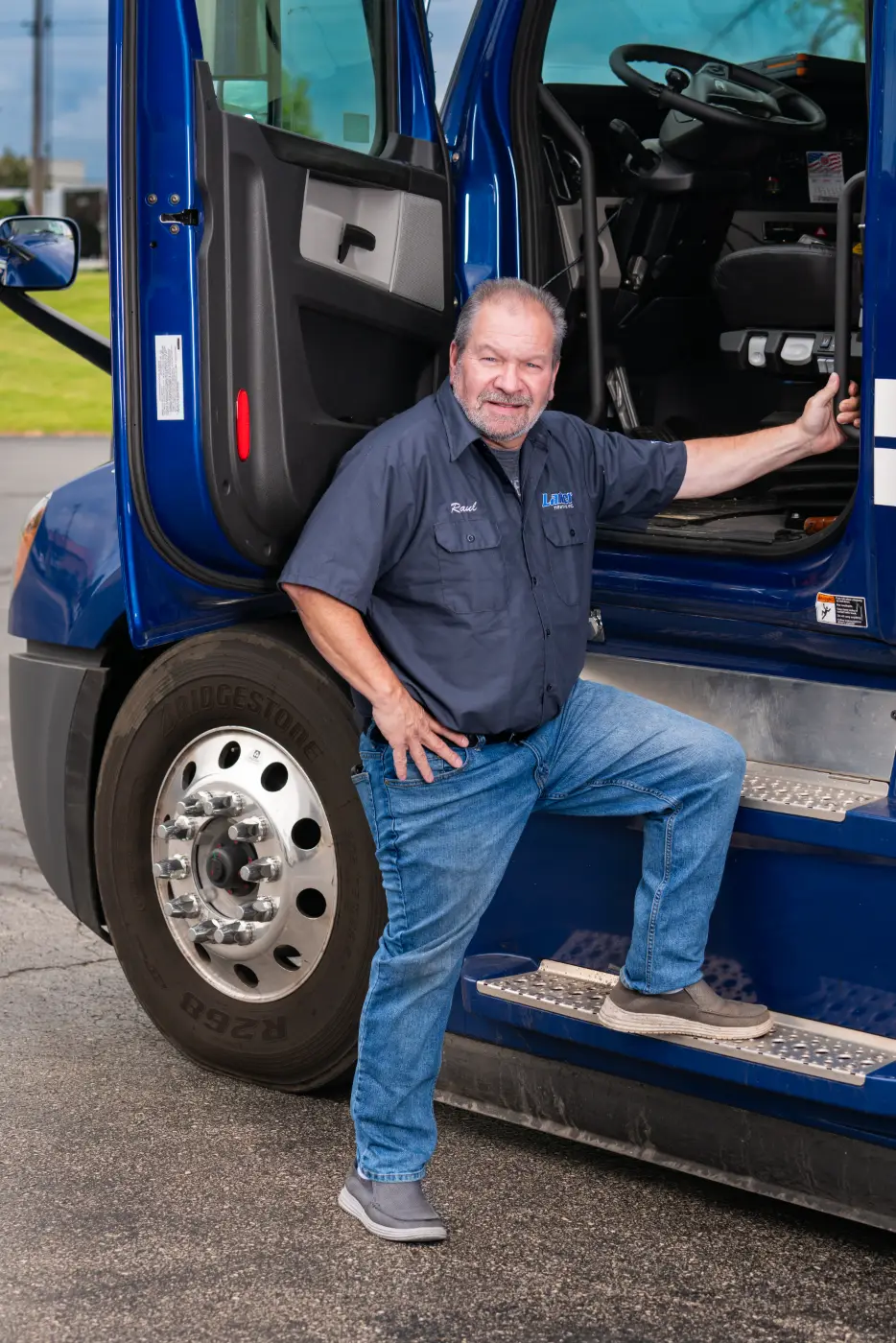
Local truck drivers in the US earn a median of about $58,600 a year, but that figure covers everything from light delivery work to Class A line haul, so it tells you very little about any particular job. What a local Class A driver actually takes home depends on the hours, the equipment and whether the carrier pays for time or for miles.
Here is what the published figures say, and what a local driving job at Laufer pays.
What do local truck drivers make on average?
The Bureau of Labor Statistics puts the median wage for heavy and tractor-trailer truck drivers at $58,640 a year as of May 2025, with Wisconsin almost identical at $58,610. The national spread runs from about $47,960 at the 25th percentile to $69,120 at the 75th and $79,380 at the 90th.
Online salary sites disagree with each other, often by a wide margin. That is because they pool very different jobs under one heading: Class B delivery routes, non-CDL box truck work, part-time driving and full-time Class A freight all land in the same average. A number built from that mix is not a useful guide to what a particular local job pays.
The more useful question is what a specific carrier pays for a specific job, on a specific schedule.
What local drivers earn at Laufer
Local driving at Laufer is home daily, Monday to Friday, out of Hartford, Wisconsin.
| Role | Weekly | Annual |
|---|---|---|
| Local dry van driver | $1,300 to $1,600+ | $68,000 to $80,000+ |
| Local flatbed driver | $1,350 to $1,800+ | $70,000 to $90,000+ |
Both ranges start well above the national and Wisconsin medians of about $58,600. Local flatbed starts above the 75th percentile for the occupation nationally, and the top of both ranges clears the 90th percentile of $79,380.
Flatbed pays more than dry van for a reason. Securement, tarping and working an open deck in Wisconsin weather are skills, and the pay reflects them.
What a local week actually looks like in pay
A normal local week at Laufer runs 45 to 55 hours across five days, with overtime paid after 40. Drivers are paid for their time, which means the clock runs whether the trailer is loaded or empty, and whether the dock is quick or slow.
There is also a guaranteed weekly minimum of $1,250 for drivers who are fully available Monday to Friday. In practice it rarely comes into play, because drivers typically earn more than that, but it is the figure worth asking any carrier about. A wide advertised range means very little without a floor underneath it.
In practice, a typical local driver takes home somewhere between $1,300 and $1,800 in a normal week.
What raises a local driver's pay
Three things move the number at Laufer:
- Experience. Years holding a Class A CDL, and what you have hauled with it.
- Time at Laufer. Pay moves up with tenure.
- Merit and performance. How you do the job counts, not just how long you have done it.
Moving from dry van to flatbed helps a driver earn more, and Laufer will train the right candidate on flatbed technique.
What the weekly number doesn't show
Two jobs advertising the same weekly pay can be worth very different amounts once everything else is counted:
- 11 paid holidays, including a birthday holiday you can take on your birthday or bank for a day that suits you better
- Vacation pay from day one
- Up to 3 bonus vacation days a year through the safe driving program
- Health, dental and vision insurance
- 401(k) with company match
- Life insurance
- Passenger ride-along program
- Company-provided work shirts
- Well-maintained equipment backed by a full-time maintenance team
The maintenance point matters more to pay than it may seem. A truck that sits broken down is a truck that is not earning.
Local vs regional pay
Regional work pays more, and it should since it costs a driver nights spent at home. Laufer's regional dry van runs $71,000 to $95,000+ a year, and regional flatbed $82,000 to $95,000+, with drivers out two to four nights a week and home on weekends.
The gap is the trade. Local drivers sleep at home every night and give up the higher miles. Which one is right depends on what you want your week to look like, not just the number at the end of it.
How to compare local driving jobs
When you are weighing offers, ask these:
- Is the pay hourly, mileage or a percentage of the load?
- Is overtime paid, and after how many hours?
- Is there a guaranteed weekly minimum, and what do you have to do to qualify?
- How many hours is a normal week, and how many during busy or slow times?
- Is empty or waiting time paid?
- What is the equipment like, and who maintains it?
- When does vacation and holiday pay start?
If you are coming off the road, moving from OTR into local work covers what else changes besides the paycheck, and what home-daily trucking actually looks like walks through the day itself.
Laufer is hiring local dry van and local flatbed drivers out of Hartford. Flatbed roles call for 12 months of Class A CDL experience. See current openings.
Frequently Asked Questions
<p>The Bureau of Labor Statistics puts the median for heavy and tractor-trailer truck drivers at $58,640 a year as of May 2025. The top quarter of the occupation earns above $69,120 and the top tenth above $79,380. Local Class A work at an established carrier usually sits in the upper half of that spread.</p>
<p>It depends on the hours and the equipment. Local driving jobs that run 45 to 55 hours a week with overtime after 40 generally pay in the $1,300 to $1,800 range. A guaranteed weekly minimum matters as much as the top of the range, because it tells you what a slow week looks like.</p>
<p>Both exist. Local work is more often paid for time, because the day involves stops, docks and city driving rather than long runs. Mileage pay is more common on regional and over-the-road work. Paid-for-time arrangements favor the driver on a slow day, since waiting is still paid.</p>
<p>Some do and some don't, so ask. At Laufer, local drivers are paid overtime after 40 hours. Not every carrier does this, and two jobs quoting the same weekly figure can be very different once you know whether the hours past 40 are paid at a premium.</p>
<p>More than dry van drivers, as a rule. Flatbed work means securement, tarping and an open deck in all weather, and the pay reflects the skill involved. At Laufer the local flatbed range runs $70,000 to $90,000+ a year against $68,000 to $80,000+ for local dry van.</p>
<p>A normal week is usually 45 to 55 hours across five days. Local work tends to be longer on the clock than the mileage suggests, because stops, loading and city traffic eat time that a highway mile does not.</p>
<p>Often a little, yes, but not always, and the comparison is not only about money. Over-the-road and regional work pays for the nights you spend away. Local drivers trade some of that for sleeping at home every night, which many drivers value more than the difference.</p>
<p>Usually at the lower end of a carrier's range, moving up with experience and time at the company. At Laufer, pay takes account of experience, tenure, and merit and performance. Flatbed roles call for 12 months of Class A CDL experience.</p>
<p>At a carrier of any size you should expect health, dental and vision insurance, a retirement plan, paid holidays and vacation. These are worth real money against the weekly figure, and they are the first thing to compare when two offers look similar.</p>
<p>Wisconsin tracks the national picture closely: a median of about $58,610 a year as of May 2025, with the state's range running roughly $44,920 to $76,380 from the 10th to the 90th percentile. Local Class A jobs with an established carrier generally sit in the upper part of that.</p>