Enclosed 53-ft Dry Vans for Protected Midwest Freight
Enclosed 53-foot trailers for protected freight across Wisconsin, Chicagoland, the Midwest and beyond.
What Is a Dry Van?
The most common trailer on the highway.
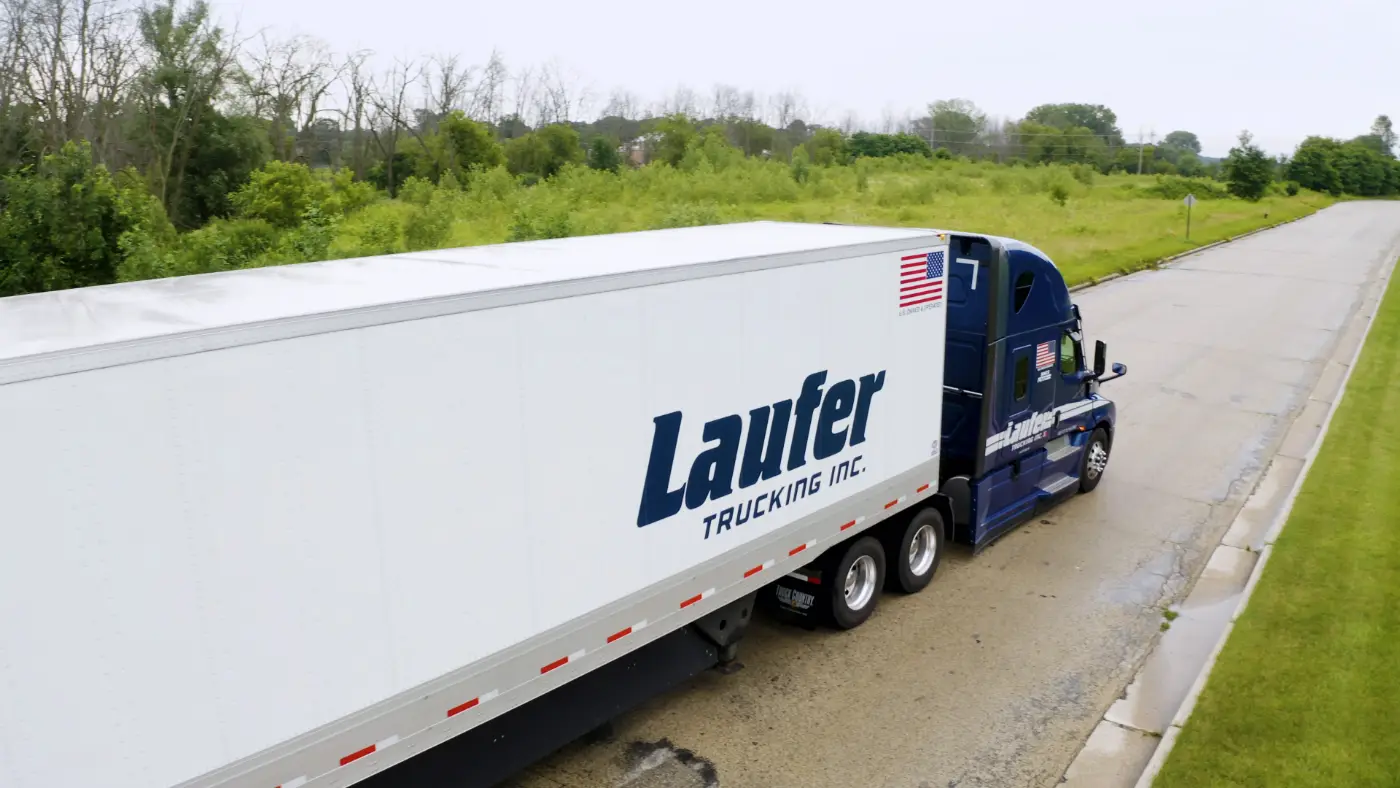
A dry van is a fully enclosed trailer used to haul freight that needs to stay protected from weather and road conditions. It's the most common trailer type on the highway — the standard choice for palletized, packaged, and boxed goods moving between manufacturers, distribution centers, and end customers.
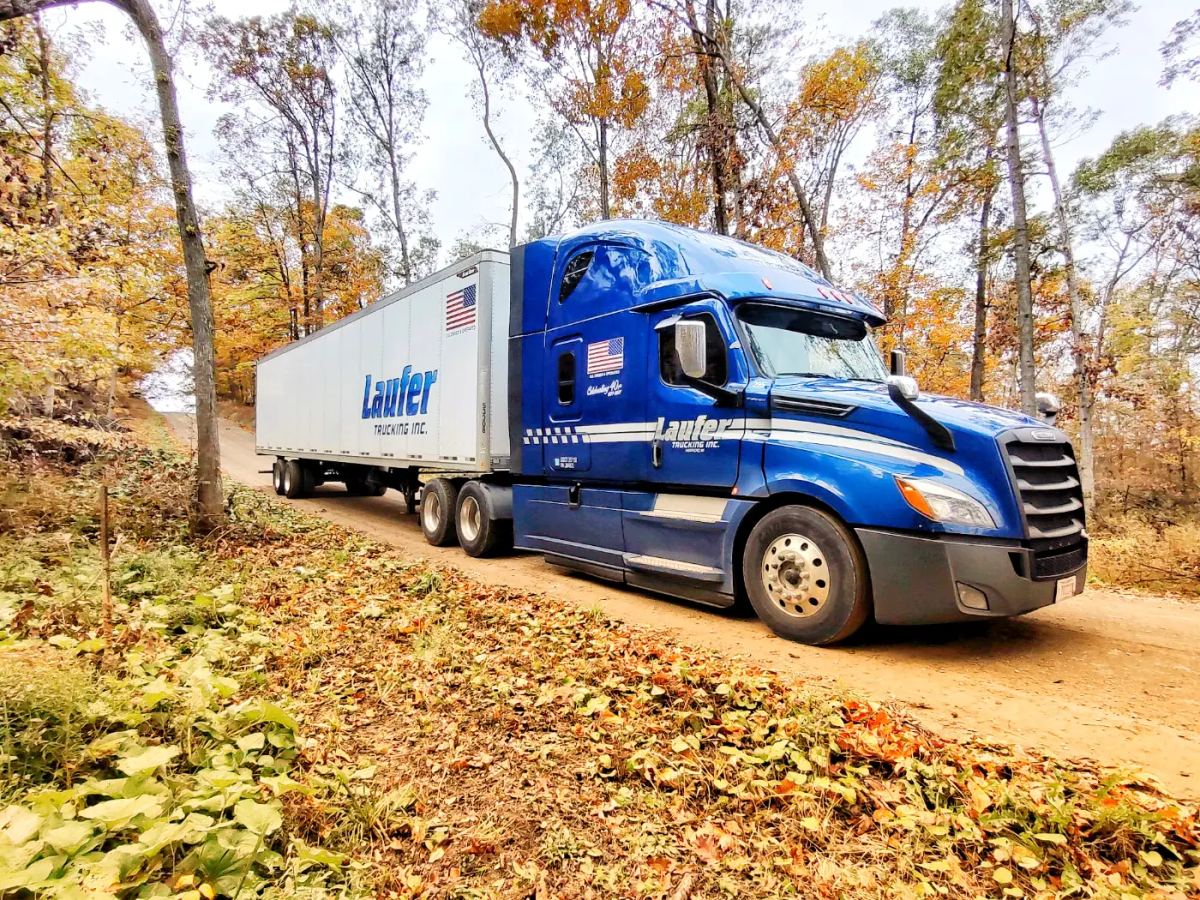
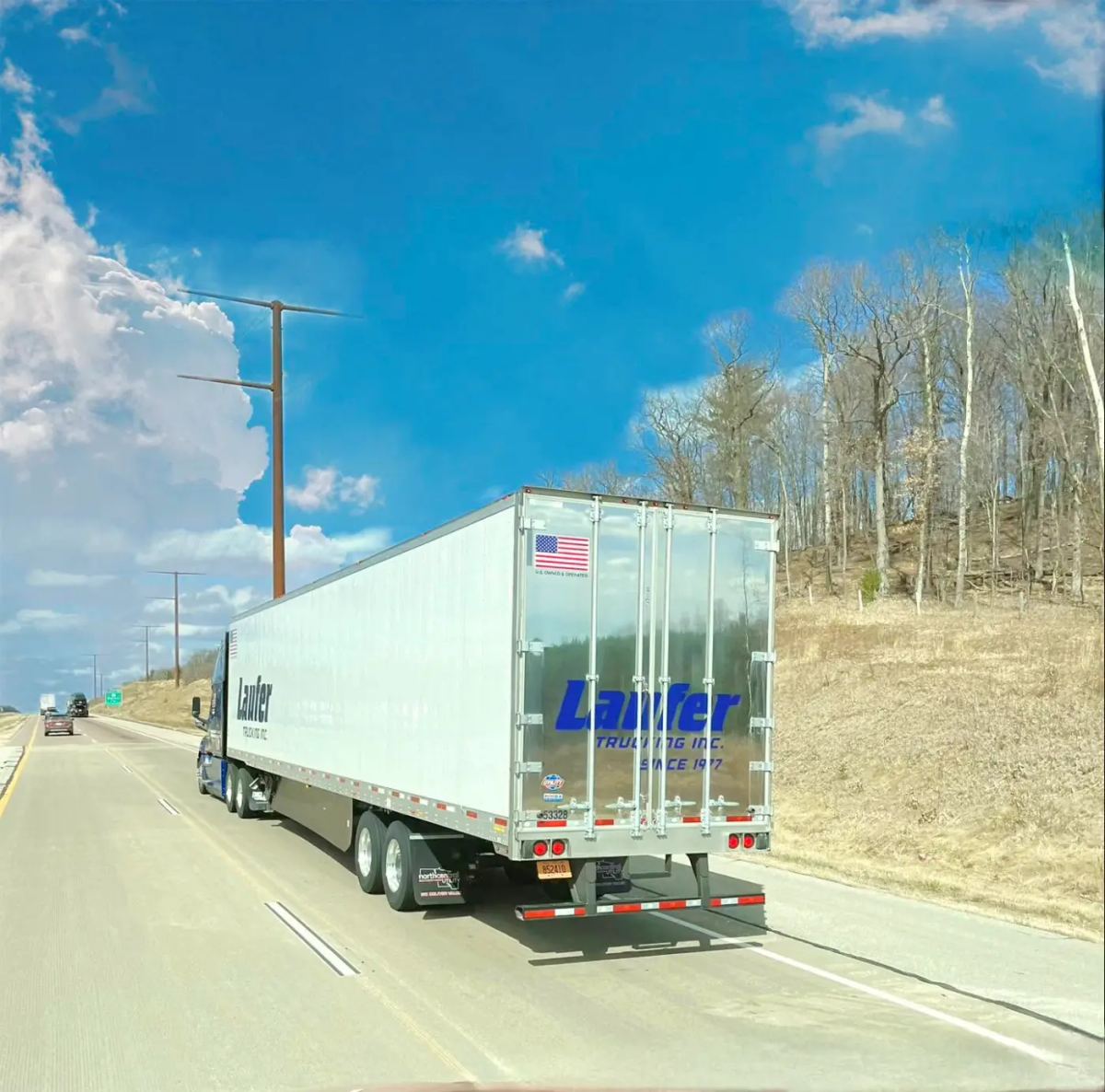
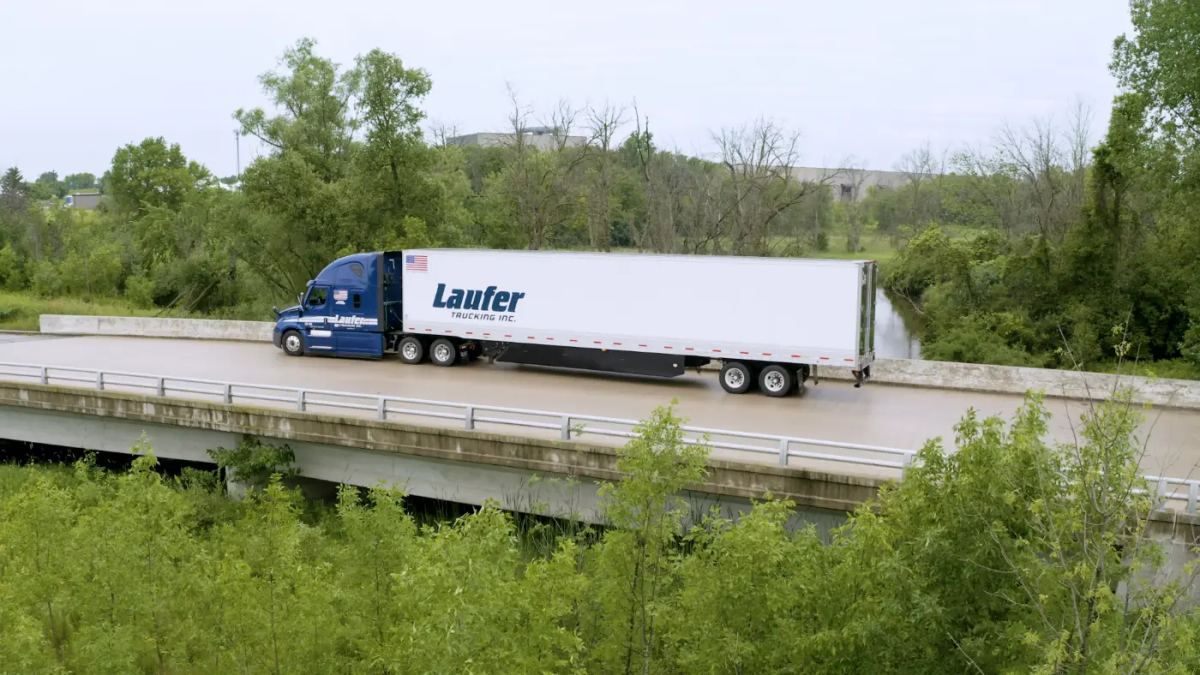
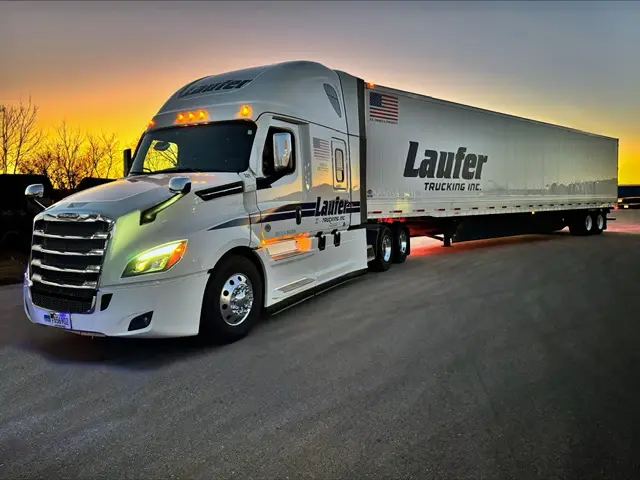
Laufer runs a modern dry van fleet out of Hartford, Wisconsin, handling the everyday work of Midwest dry van shipping — manufactured goods, packaged products, components, and palletized loads that belong inside a closed trailer rather than under a tarp.
| Dry van spec | Laufer fleet |
|---|---|
| Usable length | 53 feet |
| Usable width | 101 inches |
| Usable interior height | 110 inches (freight should not be higher than approx. 105") |
| Loading | Rear-load only, swing doors at back |
| Typical payload | Up to ~45,000 lb (varies by load)* |
*Payload depends on the weight of the load and the tractor-trailer itself. Federal rules cap the full rig at 80,000 lb gross. Call us with your load and we will confirm.
Dry Van Dimensions and Capacity
Interior usable dimensions — what actually matters for your load.
A Laufer dry van offers 53 feet of usable length, 101 inches of usable width, and 110 inches of usable interior height.
For planning, a 53-foot dry van holds 26 standard 48-by-40-inch pallets loaded in a single floor layer. The 110-inch interior height clears standard palletized and dock-loaded freight, but the freight itself should not be higher than about 105" to be able to go over the dock plate while loading and still be maneuverable while inside the trailer.
When a Dry Van Is the Right Choice
A dry freight van is the right call when your load is palletized or packaged, fits through standard dock doors, and needs to stay enclosed from origin to destination. Dry Vans work for the vast majority of finished-goods freight: cases on pallets, boxed consumer products, packaged food and beverage, components and parts in returnable containers, and small-to-mid-sized manufactured goods.
Where a dry van isn't the right tool: loads that have to be lifted on or off from above (use an open flatbed), loads that are too tall or too wide for an enclosed trailer (use a step deck or open flatbed), and loads that need side-load access plus weather protection (use a Conestoga). For a side-by-side view of all trailer types we run, see our Wisconsin trucking services overview. For everything else, the enclosed dry van is the default, and it's almost always the cheapest, simplest equipment that gets the job done.