Flatbed vs Conestoga: A Driver's Guide
25 Aug 2026
Flatbed vs conestoga from the driver's seat: tarping, securement, physical demands, and pay. See which open-deck job fits the driver you are.
Quick answer: For a driver, the biggest difference between flatbed and conestoga work is tarping. Flatbed work means hand-tarping loads in all weather, more physical labor, and securement skill on every load. conestoga work uses a rolling cover that all but eliminates hand-tarping, so the days are less physically punishing while still paying flatbed skill level driver rates. Both trailer types reward securement know-how; the conestoga just saves your back and your time at shippers and receivers.
If you are choosing between a flatbed job and a conestoga job, the trailers haul similar freight, but the day-to-day work feels very different from the driver's seat. This is a driver's guide to that difference: what each job actually demands of you, what is easier on your body, how the pay tends to compare, and which one fits the kind of driver you are. The same question from the freight side, written for shippers, is which trailer suits which load.
What is the real difference for the driver?
Both flatbeds and conestoga trailers are open-deck equipment. They load from the side, top or rear in some cases, carry similar freight like steel and machinery, and both demand that you secure a load properly. The difference a driver experiences is the convenience the rolling tarp system provides.
On a flatbed, if the freight needs protection from weather, you tarp it by hand. That means climbing on the load, dragging heavy tarps into place, in many cases padding the load to protect both the cargo and the tarps, and skillfully placing and securing the tarp, in the rain, the wind, and the Wisconsin cold. On a conestoga, a rolling tarp-and-curtain system slides over the load instead. You still secure the freight, but the often meticulous and painstaking tarping step is largely gone. That one difference shapes the whole workday.
What is flatbed driving like day to day?
Flatbed work is the most physical of the open-deck jobs, and a lot of drivers take real pride in that. You are hands-on with every load: throwing straps and chains, setting blocking, and tarping when the freight calls for it. You learn securement until it is second nature, because on an open deck the load is held by nothing but the gear you put on it.
The upside is skill and variety. Flatbed drivers tend to be respected as among the most capable on the road, because the work demands it. Tarping is regarded as an art by the best in the business. The downside is the physical toll and the weather: hand-tarping a steel load in a January wind is nobody's idea of fun, and it adds time at both ends of a haul. If you take satisfaction in doing demanding work well and do not mind the labor, flatbed driving is honest, skilled work. What those loads actually involve comes down to the trailer steel rides on.
What is a conestoga job like day to day?
conestoga driving keeps the open-deck skill but takes most of the tarping pain out of it. To load, you roll the cover back, the freight loads from the side or top, you secure it, and you roll the cover over the cargo. The load is protected from weather without you ever dragging a tarp over it by hand. You still need to know load securement, but your body and mind will be thankful to have a conestoga on many types of loads.
The trade is that the cover system is its own piece of equipment to learn and maintain, and the trailer is a slight bit heavier. But for most drivers, especially as the miles and years add up, losing the hand-tarping is a big quality-of-life gain. The cover system itself is worth understanding properly before you take one out.
Which pays more, flatbed or conestoga?
Both flatbed and conestoga are open-deck specialties, and open-deck freight generally pays better than dry van work because it takes more skill. Between the two, pay is usually similar, since they haul comparable freight at comparable rates. The honest difference is in the work, not the paycheck: flatbed asks more of your body for similar money, while conestoga delivers similar pay with less physical wear.
What matters more than the trailer is the carrier's pay structure. Steady, predictable weekly pay protects you regardless of which deck you run. Laufer's local flatbed drivers earn $70,000–$90,000+ a year ($1,350–$1,730+ a week), and regional flatbed drivers earn $82,000–$90,000+ a year ($1,575–$1,730+ a week), paid by direct deposit, with extra pay for stops, overnights, and detention on top.
Because we recognize using a flatbed presents extra challenges and labor, stop pay with an open flatbed is higher at Laufer Trucking, even if a load does not require to be tarped. We are happy to explain our full pay structure to interested drivers.
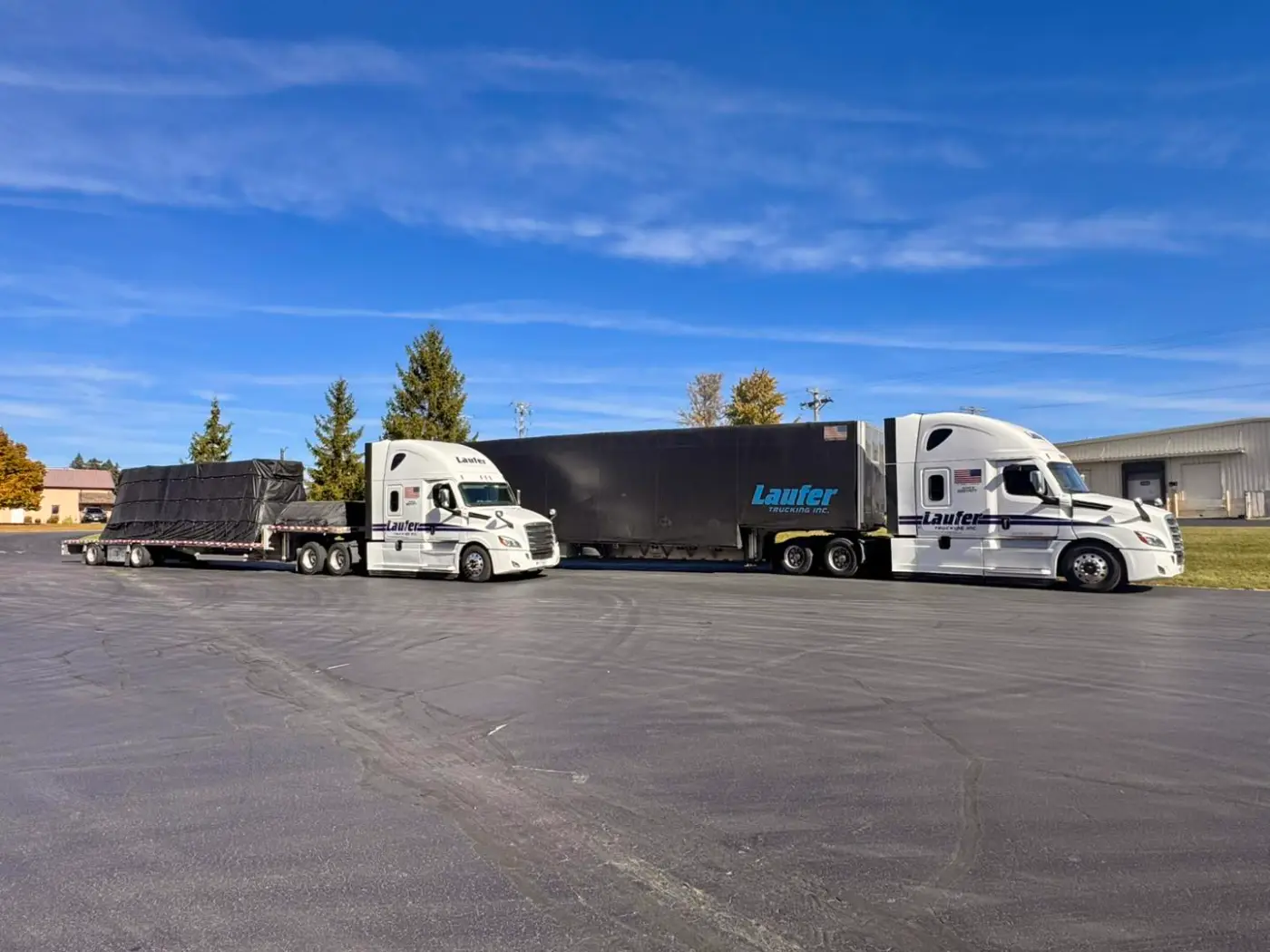
To be clear, all flatbed drivers at Laufer use a mix of flatbed and conestoga trailers. The conestogas are often utilized more often on local work as there are more stops throughout the day vs. a driver who is running regionally.
Which one is right for you?
It comes down to your body, your preferences, and how you like to work. Here is the honest side-by-side from the driver's chair.
| From the driver's seat | Flatbed | Conestoga |
|---|---|---|
| Tarping | Hand-tarped in all weather when freight needs cover | Rolling cover replaces most hand-tarping |
| Physical demand | Highest of the open-deck jobs | Open-deck work, easier on the body |
| Securement skill | Essential on every load | Essential on every load |
| Pay | Open-deck rates | Similar open-deck rates |
| Best for the driver who | Takes pride in demanding, hands-on work and the artistry of a great tarp job | Wants open-deck work with less wear and tear |
The short version: both pay open-deck rates and both demand real securement skill, so the deciding factor is how much hand-tarping your body wants to do. Many drivers start on a flatbed to build the skill and move to a conestoga later in their career, when the appeal of skipping the tarp grows. At Laufer all drivers in our flatbed division use both types of trailers.
Do you need different skills for each?
The core skill, securement, is the same for both, and it is the skill that matters most. Knowing how to block, brace, strap, and chain a load so it does not move is non-negotiable on any open deck. If you can secure a flatbed load properly, you can secure a conestoga load.
The differences are smaller. Flatbed adds the tarping skill and the stamina for it. conestoga adds learning the cover system, how to roll it, latch it, and keep it running right. It also requires respect for the expense of the piece of equipment. conestogas are harder to back into tight spaces and extra diligence is required. There are also a lot of moving parts which are costly to buy and maintain. Neither is hard to pick up if you already have the securement fundamentals, which is why many drivers move between the two over a career. A good carrier will work with you to get comfortable on the equipment you are using.
Drive flatbed and conestoga with Laufer
Laufer runs both flatbeds and conestogas out of Hartford, Wisconsin, hauling steel, machinery, and high-value manufacturing freight across the Midwest. If you want skilled open-deck work with a family-owned carrier that owns its equipment, come take a look. You can read about our flatbed positions and come in to visit and see everything at Laufer Trucking.