Best Trailer for Hauling Steel: Laufer Has The Right Equipment
25 May 2026
The best trailer for hauling steel depends on the steel. Compare flatbeds, conestogas and dry vans, and learn more about how steel coils are secured for transport.
The best trailer for hauling steel depends on the steel. For heavy coils, structural steel and certain weldments that tolerate the weather, a flatbed wins on accessibility and securement. For finished steel that cannot risk rust, rain, or road spray, a covered trailer wins because it protects the load without hand-tarping. Laufer runs conestogas for steel in all forms, alongside their flatbeds. In some cases steel can ship in dry vans as well.
Steel is one of the most demanding kinds of freight on the road. It is heavy, it concentrates weight in a small footprint, and a shifted load is a serious hazard rather than simply a damaged product. This guide covers which trailer wins for which kind of steel, the importance of working with an experienced steel carrier, and why conestogas are a great solution for finished steel. Laufer Trucking hauls steel coils, sheets, bars, tubes and various other steel products.
What is the best trailer for hauling steel?
There is no single answer, because steel comes in forms that need different things from a trailer. Heavy coils and raw structural steel need a deck that loads from the side or top and securement built for concentrated weight, which requires a flatbed. Finished or coated steel that cannot be allowed to rust or get marked needs the same open-deck access plus protection from weather, which means the labor intensive work of padding and tarping. A better option which saves time and physical effort is the conestoga.
The deciding question is whether the steel can tolerate the elements. Raw steel headed to a fabricator usually can, so a flatbed is the simplest, most economical choice. Finished steel, painted steel products or injection molds headed to a customer usually cannot, so the load needs to be covered. The conestoga is the best choice for these shipments.
Laufer Trucking also has customers that ship steel on dry vans. This can be accomplished with steel coils that are less than about 7,000# and can be placed laying down on skids. This can be challenging to keep safe in transit, but Laufer has perfected the technique.
Why do conestogas win for most steel?
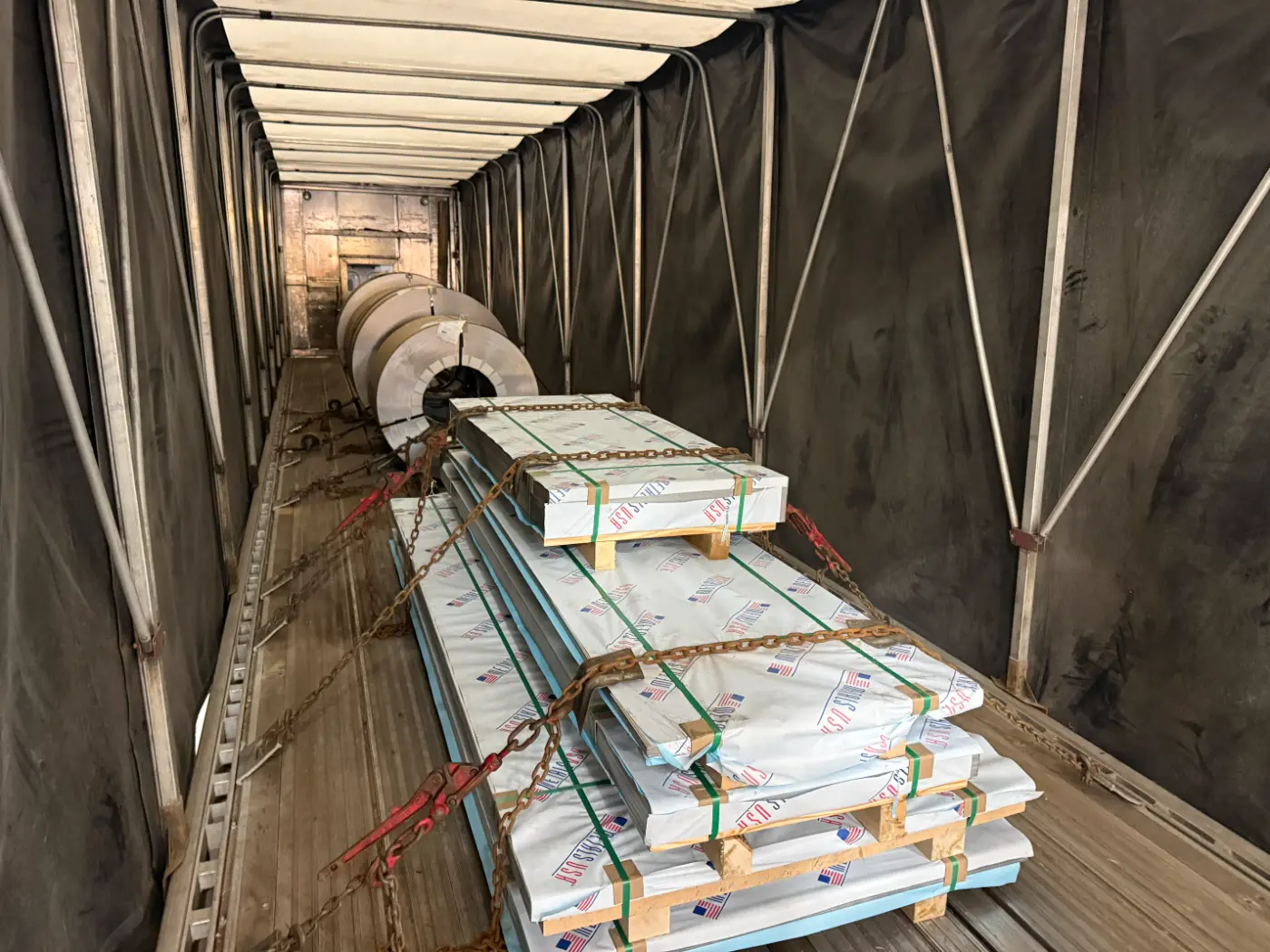
For steel that has to stay dry and clean, a covered trailer solves two problems a bare flatbed cannot. It keeps rain, snow, and road spray off the load across a long haul, and it does so without the slow, weather-dependent work of hand-tarping. Tarping isn’t simply placing the tarp over the product, it involves padding and covering sharp edges which can be quite time consuming. With a conestoga the driver simply rolls the cover back to load by forklift or crane, secures the steel, and rolls the cover forward to seal it. The steel gets open-deck loading and full protection in one move.
Laufer runs conestogas built for this exact work. Laufer's flatbed service and Laufer's Conestoga trailers utilized by experienced drivers help you with your steel (in any form) shipment.
How is steel secured in transit?
Steel securement is exacting work, and it is where a steel-experienced carrier earns its keep. Getting coil and sheet steel securement right takes the proper equipment on the trailer, the correct placement for the steel’s orientation and weight, and the judgment to know when a load is ready to move.
It also takes the right working limits. Federal rules set minimum numbers of tiedowns based on cargo weight and length, and require enough aggregate tiedown strength to hold the load, but heavy steel often calls for more securement than the bare minimum. An experienced driver reads the coil, the deck, and the route, then secures to what the load actually needs. That difference in judgment is why steel shippers tend to stay with carriers who haul it regularly rather than rotating through whoever is least expensive on any given day.
Laufer Trucking has been hauling steel for going on 50 years. We take doing it right seriously.
Flatbed vs conestoga for steel: which protects better?
A flatbed and a conestoga load steel the same way, from the side or top. The difference is protection, time and saved driver labor. A flatbed leaves the steel exposed, which is fine for raw and structural steel but means hand-tarping anything weather-sensitive. A Conestoga seals the load under a rolling cover, so finished steel stays dry without tarps.
There are some situations where a Conestoga can be a limitation, most notably when loading space is restricted or overhead crane clearance is limited. Backing a Conestoga into a building with a tight overhead door can be difficult, and the trailer's framework may interfere with low crane operations. In these cases, a traditional open flatbed is often the better choice, providing unrestricted overhead access and greater flexibility during loading and unloading.
For heavy coils specifically, a flatbed is often preferred for the cleanest crane and forklift access, with securement done to federal coil rules. For finished steel products, plate, and coated steel, the conestoga protects better and turns dock time faster because there is no tarp to wrestle or sharp edges to pad. Let our team help you decide which trailer should be used for your product. The wider trade-off runs across flatbed, dry van and Conestoga, and on open-deck freight it usually comes down to the cover system.
Why are covered trailers called conestogas?
The term “conestoga” started with a link to the historical “covered wagon/conestoga” type apparatus of the pioneer days invented in Conestoga Valley, PA.
The original manufacturer of this type of trailer named the trailer conestoga and much like “Kleenex” the term became the standard for the product.
For a shipper, the practical takeaway is simple: whatever the trailer is called, the question is whether the steel needs protection and open-deck loading at the same time. If it does, ask us about our conestogas, describe the steel, and the right trailer in the fleet gets matched to the load.
Why Laufer for steel freight
Laufer is an asset-based, family-owned carrier that has hauled the steel and manufacturing freight of the Midwest for decades, and it owns the equipment that moves it: flatbeds, Conestogas, and even dry vans at times, all run by Laufer drivers from one Hartford terminal. That means coil securement experience and the right trailer for the steel sit under the same roof, not stitched together from a load board. All four trailer types Laufer runs sit side by side on the services page, and there is a wider range of trailers in use across the industry.
Get a steel freight quote
If you are moving steel, coils, or finished steel products and want it matched to the right trailer and secured correctly, call Laufer at (262) 673-6810 with your origin, destination, weight, dimensions, and pickup window. We will confirm whether the load belongs on a flatbed, a Conestoga, or the covered wagon, and work the rate from there.