Heavy Machinery Hauling: Trailers, Riggers and Permits
20 Nov 2026
Which trailer suits a machine, how to time the truck around a rigging crew, where the legal limits sit, and what drives the cost of hauling machinery.
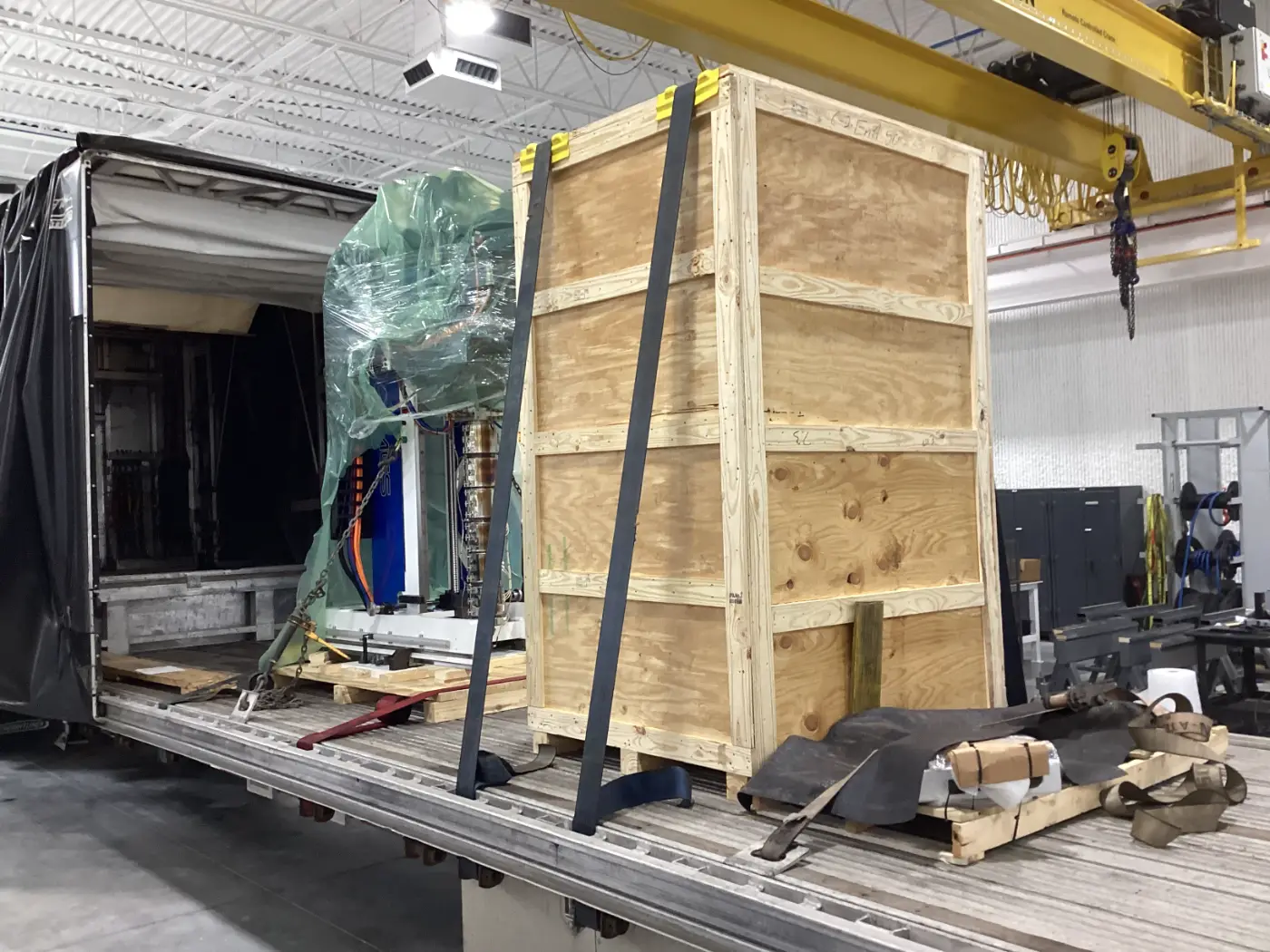
In heavy machinery hauling, there are a lot of considerations that make the move go well. There's a rigging crew booked, a pickup and delivery window that cannot be missed, proper securement for often high-value freight, difficult or time-consuming tarp jobs and in some cases, oversize permits.
For the right crews and carriers, a move like this can be routine. When trucks don't show up on time, it turns into a rigger's invoice for waiting, a rebooked lift and a production line sitting idle until the truck shows up.
Which trailer is best for hauling machinery?
The right trailer depends on the machine's height, width and weight, and on whether it can travel uncovered. At Laufer, machinery that needs protecting from the weather goes on a standard conestoga first. If it's too tall for that, the next option is a step deck conestoga.
A conestoga is an open-deck trailer with a rolling tarp-and-curtain cover. It loads from the side or the top like a flatbed, so a crane or forklift can set the machine down where it needs to sit, then the cover rolls over it and it arrives protected like a van. Laufer's conestogas have 104 inches of height under the cover, against the 96 inches common on many conestogas, which is often the difference for a tall machine. Control cabinets, electrical components and panels stay out of road spray, rain and the salt on Wisconsin highways in winter.
The step deck conestoga drops the deck lower over most of its length, so the same cover clears a taller machine.
Machinery that can travel uncovered can go on a flatbed or a step deck, which take full legal width and, on the step deck, more height.
| Trailer | Deck | Usable width | Freight height | Max payload |
|---|---|---|---|---|
| Conestoga | 52' usable | 100–101" | 104" under the cover | 47,000 lb |
| Step deck conestoga | 41' lower, 10' upper (about 51' usable) | 100–101" | 115–118" lower deck, 104" upper deck | 45,500 lb |
| Flatbed | 48' or 53' | 102" | up to 102", including dunnage | 48,000 lb |
| Step deck | 41' lower, about 10' upper | 102" | about 122" | 47,000 lb |
A dry van can carry a smaller machine that's crated or on skids and can be forklifted in from a dock, since vans load from the rear only. How a flatbed, dry van and conestoga compare on everyday freight is worth knowing if you ship more than machinery.
Loading and unloading: where riggers come in
Most machinery moves with a rigger at one end or both ends. A rigger is a crew with specialized lifting equipment and the expertise to move large, high-value items safely: cranes, machine skates and forklifts rated for the weight. Some customers unload machinery themselves, depending on their own skills and equipment on site, but on loads like these a rigger is usually involved.
That makes the shipment time-sensitive. Riggers are expensive, and nobody wants a rigging crew standing around waiting for a truck to show up. A late truck turns into a bill for the crew's time, a rescheduled lift, and sometimes a production line or installation that sits idle. This is why booking with a reliable carrier matters most on machinery.
A few things keep the handoff clean:
- Set the appointment with the rigger first, then book the truck to it, not the other way round.
- Share contacts. The rigger, the receiving contact and the carrier should all be able to reach each other on the day.
- Confirm the lift points. The rigger decides how the machine is picked and where it sits on the deck. The driver secures it once it's down, and is responsible for that securement under federal cargo rules.
- Have the receiving site ready before the truck is dispatched: door size, floor capacity and a clear path to where the machine will be installed.
Insurance for high-value machinery
A machine's value can be well above what standard cargo coverage pays out. Laufer can secure high-value cargo insurance for loads like these, which matters to some customers. If it matters to you, ask about it when you request your quote.
Legal limits, and when machinery needs a permit
Laufer hauls machinery within legal limits only and doesn't take oversize loads. It still helps to know where those limits sit and how permits work, because that tells you which kind of carrier your machine needs.
A machine needs an oversize or overweight permit when the truck and load go past the legal limits. In Wisconsin, those are 8 feet 6 inches wide, 13 feet 6 inches high and 80,000 lb gross weight, with no more than 20,000 lb on a single axle and 34,000 lb on a tandem. Height is measured from the road to the top of the load, so the trailer's deck height counts against it, which is why taller machines move on step decks and lowboys.
Permits are issued by each state the load travels through, not once for the whole trip. Wisconsin's Department of Transportation issues single-trip permits valid for five days and multiple-trip permits valid for three to 12 months, and permits are generally issued only for non-divisible loads: freight that can't reasonably be taken apart to make it legal. Depending on the size of the load and the state, an oversize move can also need a set route, travel-time restrictions and escort vehicles, which is why oversize work needs more lead time.
The rules on weight per axle are important to pay attention to, because a heavy machine sitting in the wrong place on the deck can overload one axle while the total stays legal. That's exactly what Wisconsin's bridge laws are written to prevent.
Where Laufer stops
Laufer hauls machinery up to the limits of its conestoga trailers and doesn't haul oversize shipments. If a machine won't fit within the trailers above, we'll let you know that the load exceeds our capabilities, so you can look for a heavy haul carrier with the lowboy or RGN trailers and permits it needs, or a company that is capable of tarping oversize loads.
What drives the cost of hauling machinery
There's no standard rate for moving a machine, because no two moves are alike. The freight quote comes down to a handful of things:
- Distance and lane. How far the machine travels, and whether the truck has freight to reload near the delivery or has to come home empty.
- Trailer type. A covered conestoga or step deck conestoga is specialized equipment, and there are fewer of them on the road than flatbeds.
- Size and weight. A machine that takes the whole deck, or needs the step deck conestoga's extra height, requires more care, time and expertise than a smaller load.
- Timing. A fixed appointment tied to a rigger's schedule is a tighter commitment than a flexible pickup window.
- Value. High-value cargo insurance is an added cost when a machine's value calls for it.
- Accessorial charges. Waiting time past the free period, a layover when a site isn't ready, or a second stop are billed on top of the line-haul rate as part of the total freight charge.
Rigging is usually a separate cost from the freight, booked with the rigger directly. Getting the timing right between the two is the best way to keep pricing within the original budget. Some riggers will coordinate the trucking on the customer's behalf, either with their own trucks or with a trusted carrier partner.
How to prepare a machine for transport
Most of the work happens before the truck arrives. The manufacturer's transport instructions come first, since they cover lift points and anything that has to be locked down. Beyond that:
- Measure and weigh it. Send the carrier the length, width, height and weight, plus photos. Height is the one that most often decides which trailer can take it.
- Drain fluids. Coolant, sump and hydraulic reservoirs are usually drained, following the manufacturer's guidance.
- Lock moving parts. Secure axes, spindles, tool changers, doors and anything else that can travel, and remove tooling unless the manufacturer says otherwise.
- Secure or remove loose items. Chip conveyors, pendants, cable bundles and guarding either come off or get strapped down.
- Protect connections. Cap hoses and fittings and cover electrical openings against dust and water.
- Mount it for lifting. Skids or transit brackets give the rigger something solid to lift from and the driver something solid to secure.
- Book the rigger and the truck together, to the same appointment.
Ship machinery with Laufer
Laufer is a family-owned, asset-based carrier in Hartford, Wisconsin, running conestogas, step deck conestogas, flatbeds, step decks and 53-foot dry vans across Wisconsin, Chicagoland and the Midwest since 1977. We own our trucks and trailers, and on machinery that matters, because a rigger's time is on the clock from the moment the truck is due.
Call Laufer at (262) 673-6810 with the machine's dimensions and weight, where it's going and whether it needs to stay covered, and we'll tell you straight away whether it fits on one of our trailers.
Frequently Asked Questions
It depends on the machine's height, weight and whether it needs protecting from weather. Covered machinery usually goes on a conestoga, or a step deck conestoga when it's taller. Uncovered machinery can ride on a flatbed or step deck. Machines too tall or heavy for those need a lowboy or RGN and an oversize permit. Laufer does not tarp machinery, so it must fit in a conestoga for Laufer to haul it.
Only when the truck and load exceed legal limits. In Wisconsin, that means wider than 8 feet 6 inches, taller than 13 feet 6 inches, or heavier than 80,000 lb gross or the per-axle limits. Each state on the route issues its own permit, and permits are generally only issued for loads that can't be taken apart.
The common limit is 13 feet 6 inches, measured from the road to the top of the load, and each state sets its own. Because the trailer deck counts toward that height, taller machines move on trailers with lower decks, like step decks, step deck conestogas and lowboys.
A rigger is a crew with specialized lifting equipment, such as cranes, gantries and machine skates, and the expertise to move large, high-value items safely. Riggers lift the machine onto the trailer at pickup and off it at delivery, then move it into place. Some customers do this themselves if they have the skills and equipment on site.
Because a rigging crew is usually booked for a set time, and riggers are expensive. If the truck is late, the customer pays for the crew's time waiting, may have to rebook the lift, and can hold up an installation or production line. That's why a reliable carrier matters more on machinery than on most freight.
By hauling it on a covered trailer or by tarping. A conestoga loads like a flatbed, from the side or top by crane or forklift, then a rolling tarp-and-curtain cover closes over the load so it arrives dry. It keeps control panels, electrical components and finished surfaces out of rain, road spray and winter road salt.
There's no standard rate. The quote depends on distance and lane, the trailer type, the machine's size and weight, how fixed the delivery appointment is, insurance for high-value equipment, and any waiting time or extra stops. Rigging is usually a separate cost, booked with the rigger directly.
Often, yes. Standard cargo coverage has a limit, and a CNC machine or production equipment can be worth far more. Ask the carrier what its standard coverage pays and whether it can arrange high-value cargo insurance for the load. Laufer can secure high-value cargo coverage when a machine calls for it.
Follow the manufacturer's transport instructions first. Then drain coolant and other fluids, lock the axes and spindle, secure tool changers and doors, remove tooling, cap hoses and cover electrical openings. Mount it on skids or transit brackets so it can be lifted and secured, and send the carrier its dimensions and weight.
Yes, for smaller machines that are crated or on skids and can be forklifted in from a dock. A dry van loads from the rear only, so anything that has to be lifted in by crane, or is too tall for the doors, goes on an open-deck or covered conestoga trailer instead.