What Is a Freight Charge?

02 Sept 2026
A freight charge is what a carrier bills you to move a load from one place to another. On a truckload shipment it is built from three parts: linehaul, fuel surcharge and accessorials.
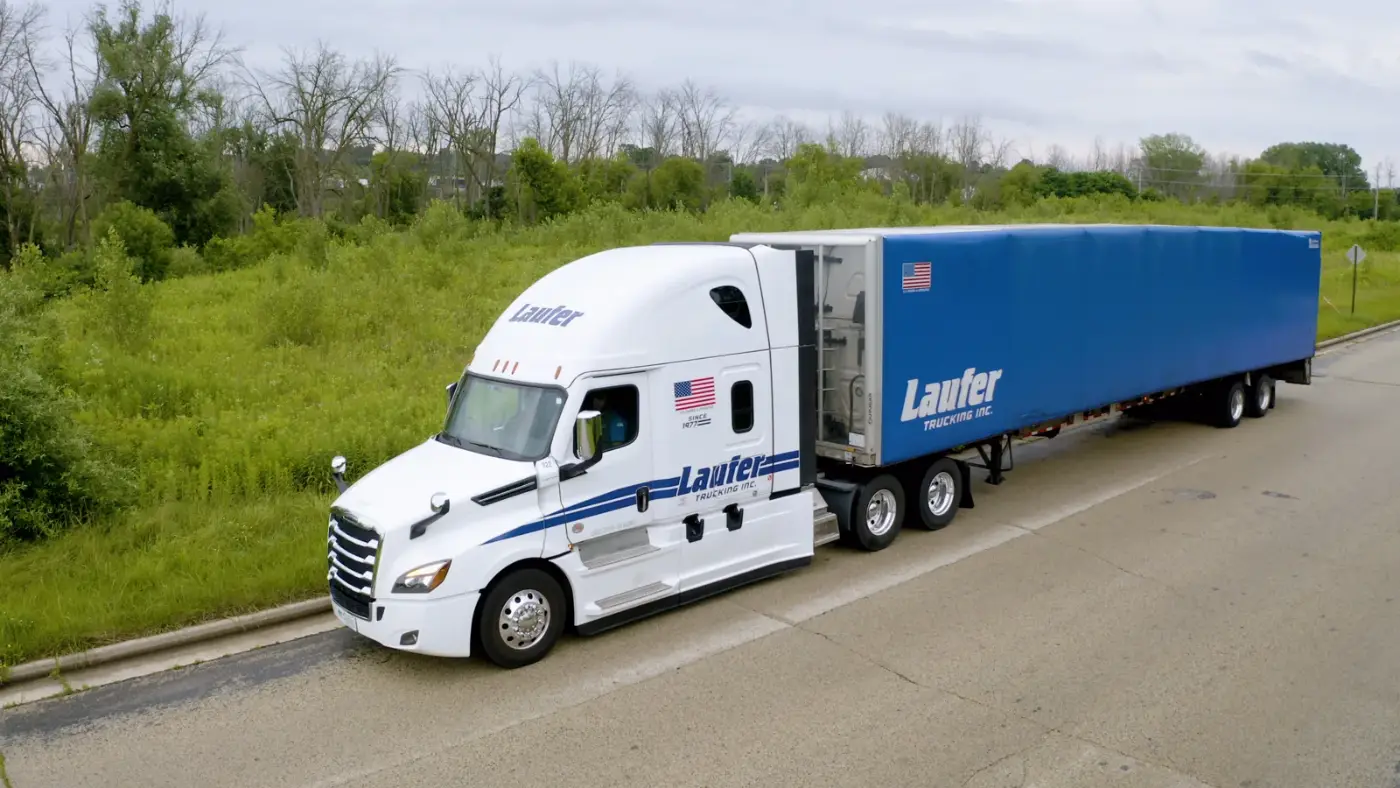
A freight charge is what a carrier bills you to move a load from one place to another. On a truckload shipment it is built from three parts: the linehaul rate for the movement itself, a fuel surcharge that tracks the price of diesel, and any accessorial charges for work beyond a standard pickup and delivery.
Knowing which part is which is the difference between reading an invoice and guessing at it. This guide covers what each component is, how it is calculated, who pays it, and what to do when a charge appears that you do not recognize.
What is a freight charge?
It is the price of the transportation service. It is the cost the carrier assigns to go to a certain area, typically calculated on a mileage basis, or for shorter runs a time basis. This typically includes a fuel surcharge component which is a separate line item, and then any accessorial costs which may come into play on a particular load.
The term gets used loosely, which causes most of the confusion. On an invoice, "freight charge" sometimes means the whole bill and sometimes means only the linehaul line within it. It is worth checking which one a quote refers to before comparing it against another.
When a rate is calculated “all in”, that means you are being given the total price in one cost.
What makes up a freight charge?
| Component | What it covers | Known when? |
|---|---|---|
| Linehaul | The movement itself: the truck, the driver, the trailer, the miles | At quote |
| Fuel surcharge | Diesel cost, adjusted as the market moves | At quote, but may be approximate until shipment date as fuel prices are indexed weekly |
| Accessorials | Work beyond a standard pickup and delivery | Some at quote, some after the fact |
The first two are almost always known before the truck rolls. The third is where invoices surprise people, because some accessorials only exist once something has happened at a dock.
What is the linehaul rate?
The linehaul is the core charge for moving the freight, and it is usually the largest line on the invoice. On truckload it is generally priced on miles, or on time invested for short trips where mileage alone does not reflect the work.
That second part matters more than it sounds. A forty-mile run that takes a driver most of the day because of dock time is not one where pricing by the mile makes sense. Short local work is often priced closer to the time it consumes or is projected to consume, than the distance it covers.
How does a fuel surcharge work?
A fuel surcharge is a separate line that moves with the price of diesel, so the linehaul rate can remain the same regardless of the ever-fluctuating fuel costs.
Without a surcharge, every swing in diesel would mean renegotiating the base rate, which would be unworkable for both sides especially in times of extreme volatility. Splitting fuel out keeps the linehaul stable and allows the fuel surcharge to match the latest pricing.
Most surcharges are indexed to the national average diesel price the US Energy Information Administration publishes every Monday. The carrier's surcharge schedule maps diesel price bands to a surcharge amount, so both parties can see where the number came from rather than taking it on trust.
While various surcharge tables exist, they basically all begin at $1.20/gallon and rise from there. In some cases companies may use a percentage based fuel surcharge. On truckload it is more often calculated by distance (mileage). Same purpose, different arithmetic, and comparing the two directly can be misleading.
What are accessorial charges?
Accessorials cover work beyond a standard pickup and delivery: detention when a truck is held beyond two hours to load or unload, extra stops, layover when a driver has to wait overnight, tarping on open-deck freight, excess insurance coverage, driver assist (when a driver must physically help load or unload) and a truck ordered and then not used, are some examples.
They exist because the work is real and somebody must be compensated to do it. Detention is not a billing trick; it is the mechanism that pays a driver for hours a dock consumed. At Laufer that connection is direct, because detention, stop pay, overnight pay and tarp pay are all named lines in what drivers are paid. A charge on your invoice for a three-hour wait corresponds to a driver being paid for three hours of waiting.
Truckload shipments are quoted with a set amount of free time for loading at origin and unloading at destination. Get the truck loaded or unloaded in a timely fashion, and no accessorials need be applied.
Freight quote, freight charge, freight invoice: what is the difference?
A quote is an estimate of what a shipment should cost, given what you have told the carrier about it. It is not binding, and it assumes the load matches the description. Timing is also an issue, rates cannot be held for infinite periods, markets fluctuate and rates must reflect those variances.
The freight charge is the agreed price for the movement, recorded on a rate confirmation or via an email, once the load is booked. Note the fuel surcharge may be an approximation at the time of quote, as fuel prices are indexed by the Dept of Energy on Tuesday’s of each week.
The invoice is the bill, issued after delivery, and it is binding. It should match the rate confirmation plus any fuel surcharge and/or accessorials that were genuinely incurred. When an invoice and a quote diverge, the gap is nearly always accessorials, or a load that turned out different from how it was described.
Who pays the freight charge?
Whoever the terms say. On a prepaid shipment the shipper pays. On a collect shipment the receiver does. The bill of lading records which, and it is worth making sure this is correct to avoid the incorrect party being billed.
There is a third arrangement where a third party is billed, neither the shipper nor the receiver, common when a buyer routes freight through their own carrier. Same principle: this too should be documented on the bill of lading.
What actually affects truckload pricing
The lane, not just the distance. A lane with freight moving both directions prices better than one where the truck returns empty, because somebody pays for the empty miles either way. A trucking company with a strong presence in a certain geographical area can generally provide more competitive pricing than a carrier who does not normally service a particular lane.
Some areas of the country command a higher price due to things like - expense of tolls to that destination, difficult terrain (mountains), ease of parking for driver, or reload potential (how plentiful other freight is in that area).
The equipment. A dry van, a flatbed, a step deck and a Conestoga do not cost the same to run. Open-deck work carries securement labor and equipment expense over and above a van trailer, for example.
Weight and load complexity. Weight affects fuel and it affects legality. A load that must be positioned carefully to stay legal on each axle group takes longer to load than one that does not. Some loads have more pieces which require extra time and thought process to load properly.
Timing. Tight pickup and delivery windows make the freight more difficult to fit into any particular carriers schedule.
The docks at both ends. A receiver that holds trucks for hours makes a lane more expensive to serve. When customers get a reputation for being slow or difficult, that is usually reflected in their rates.
How to check a freight charge you do not recognize
Many customers have a set accessorial schedule which is agreed upon ahead of time by both the carrier and the shipper. When no schedule exists, it defaults to the carriers standard charges.
If no contract or agreement exists, ask the carrier what the charge is for and what supports it. On a legitimate accessorial there is documentation: a signed bill of lading, gate or check-in timestamps, and the driver's electronic log/GPS locations. Most carriers are happy to share supporting documentation to back up any accessorial billing.
Ask early rather than at the end of the quarter. Records are easier to pull while the load is recent, and a question asked early is a conversation rather than a dispute.
Getting a straight freight quote
The most useful thing a shipper can do is describe the load accurately: origin, destination, weight, dimensions or pallet count, and the pickup window. Anything unusual about loading or unloading belongs in that conversation too, because it is the difference between a quote that holds and a quote that ends up with an accessorial.
Laufer is an asset-based, family-owned carrier in Hartford, Wisconsin, running 53’ dry vans, flatbeds, step decks and Conestogas across Wisconsin, Chicagoland and the Midwest. We quote our own trucks, so the number comes from what the work actually costs us rather than from what capacity happens to be available.
Call (262) 673-6810 with the lane and we will work the rate from there. Every trailer we run is listed here, and if you are still comparing carriers it is worth knowing what to ask before you book.