How to Choose a Trucking Company in Wisconsin

27 Apr 2026
How to choose a trucking company: check asset-based vs broker, equipment, safety record, and communication. A shipper's vetting guide for Wisconsin freight.
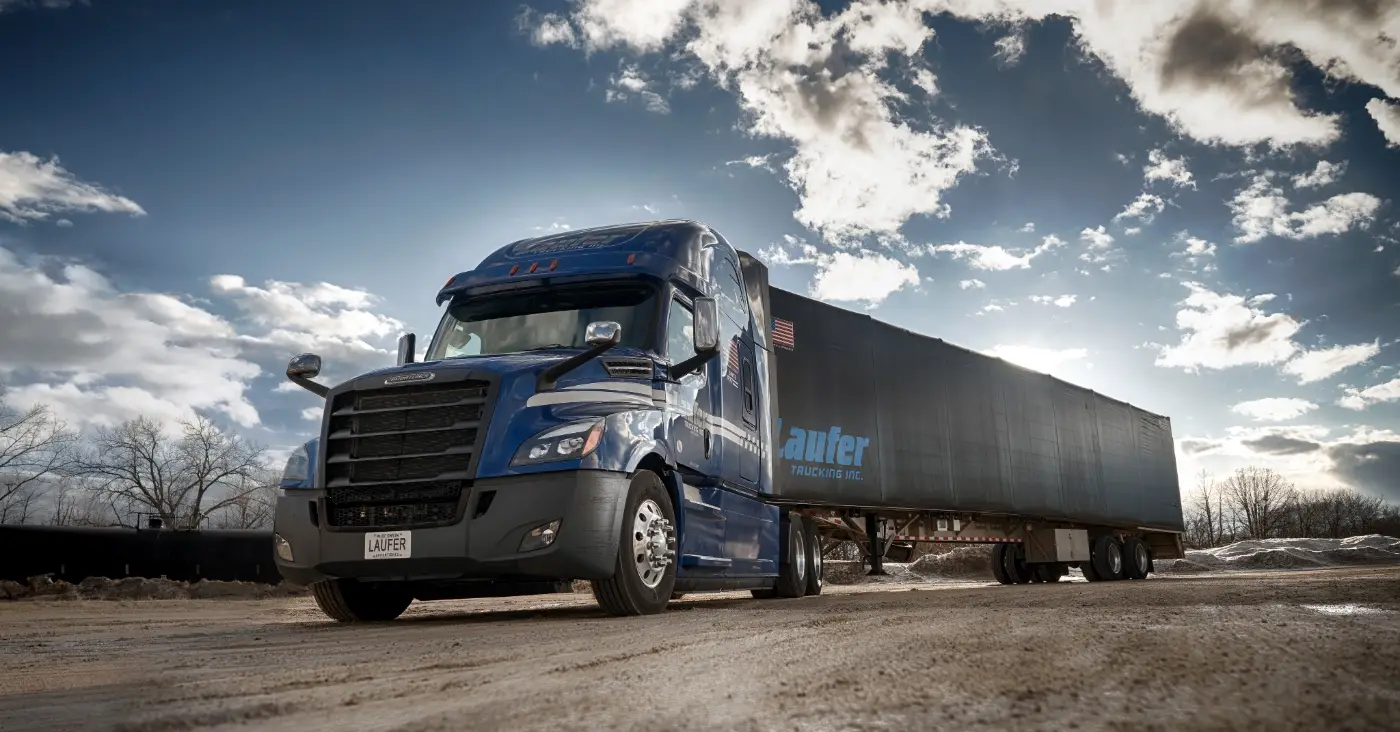
To choose a trucking company, check five things: whether the carrier is asset-based or a broker, whether it runs the right equipment for your freight, what its safety record looks like on the FMCSA SAFER system, how quickly and clearly it communicates, and whether it can give you references. A carrier that is strong on all five will move your freight reliably; a gap in any one is where problems start.
For a shipper, picking the wrong carrier means missed pickups, damaged freight, and a phone that goes unanswered when something goes wrong on the road. This guide walks through what to look for, the questions to ask before you hire, and how to verify a carrier's safety record yourself. The examples reference how Laufer Trucking operates out of Hartford, Wisconsin, as a model of what a reliable carrier looks like.
What should you look for in a trucking company?
Start with the five fundamentals. Each one tells you something different about whether the carrier can be trusted with your freight.
Asset-based or broker. An asset-based carrier owns its trucks and trailers and employs its drivers. A broker leverages other carriers to move freight. Asset-based means more accountability and consistency. Laufer Trucking also has a brokerage arm, LT2 Logistics, which lets Laufer say yes to its customers more often, even when its own assets can't accommodate the shipment. Because LT2 Logistics is run by the same team as Laufer, it is better than your average broker — real trucking experience, not just a middle man with a phone and a computer.
Equipment match. The carrier should run the trailer type your freight needs. Laufer Trucking runs dry van, flatbed, step deck, and Conestoga as part of its own fleet. We do not run refrigerated.
Safety record. A carrier's FMCSA safety record is public. A clean inspection and crash history is a baseline requirement, not a bonus.
Communication. How fast a carrier responds to a quote, and how clearly it keeps you informed in transit, predicts how the relationship will run. Laufer Trucking aims for response times within 15 minutes and clear communication when issues arise. Our brokerage, LT2 Logistics, holds the same standards and excels at customer service.
References and track record. A carrier that has served shippers like you for years, and will share references, is a safer bet than one that cannot. Laufer's testimonials section includes real statements from real customers.
A carrier that checks all five is rare enough that it is worth building a relationship with. The sections below go deeper on the ones shippers most often get wrong.
Asset-based carrier vs freight broker: what's the difference?
An asset-based carrier owns the equipment that moves your freight and employs the drivers who move it. When you book a load, the company that quotes you is the company on the dock. An asset-based company has real-time visibility into where the truck is and any issues that may come up in transit. A freight broker, by contrast, does not own trucks and relies on a network of partner carriers to move freight.
Assets and brokers each have their place in this industry, and there are different times where one makes more sense than the other.
Asset-based companies are usually the better choice when you want a steady carrier on a particular lane, need extra reliability, or have freight that is difficult to broker. Asset-based carriers often have more ability to provide drop trailers, and they have the advantage of knowing exactly where your freight is at all times.
Brokerage can be the better selection when you have a one-off shipment outside the geographic range of your asset-based carriers, or one that requires a different type of equipment than they offer. Brokerage also plays a role in covering high-volume lanes that one carrier could not cover alone due to capacity constraints. Because a brokerage relies on the assets of another carrier, communication can sometimes be more strained — even with a top customer service team — since the broker isn't in direct control of the equipment moving the shipment.
When you work with a company that offers both asset-based trucking and brokerage, like Laufer Trucking and LT2 Logistics, you can be assured your freight will get covered.
What questions should you ask before hiring a carrier?
Before you hand a carrier your freight, a short list of questions will tell you most of what you need to know:
Are you asset-based, or do you broker loads to other carriers?
Do you own the trailer type my freight needs, and run it regularly?
What is your USDOT number, so I can check your safety record?
How fast do you respond to a quote, and how do you keep me updated in transit?
Do you offer drop-trailer or preload service if I want to load on my own schedule?
Can you share references from shippers with freight like mine?
The answers separate a carrier that runs a tight operation from one that improvises. A good carrier answers all of these without hesitation. As one example of the standard to expect, Laufer responds to quote and freight inquiries within 15 minutes during business hours, runs a drop-trailer and preload program, and has a full-time maintenance department so its equipment stays in ready condition.
How do you check a carrier's safety record?
You can verify any carrier's safety record yourself, for free, before you hire them. The FMCSA runs the Safety and Fitness Electronic Records system, known as SAFER, which provides a Company Snapshot for any registered carrier. You can search by company name, USDOT number, or MC/MX number.
The Company Snapshot shows the carrier's identification and size, the commodities it carries, its safety rating if it has one, a summary of roadside out-of-service inspections, and crash data reported over the previous 24 months. A carrier with a clean inspection and crash history, an active operating status, and a fleet size that matches what it told you is a carrier you can trust with freight. Checking SAFER takes a few minutes and is the most objective vetting step available to a shipper.
A few things are worth weighing in context. Out-of-service rates compare a carrier against national averages, so a number near or below average is a good sign. An older, established carrier will have a longer record to judge than a brand-new one, which is not disqualifying but is worth noting. And remember that the federal safety rating reflects interstate operation, so for a carrier that runs heavily within one state, the inspection and crash data tell you more than the rating alone.
Why does local Midwest knowledge matter?
For freight moving in and around the Midwest, a carrier that knows the region brings advantages a national carrier cannot. Local knowledge means understanding the lanes, the seasonal road and weight restrictions, the customer base, and the realities of running freight through Wisconsin and Midwest winters. As a carrier whose terminal, maintenance shop, and dispatch all sit in one Wisconsin location, we run a network we understand.
It also means the trucks come home, the drivers know the routes, and dispatch can answer questions about your lane because they run it every week. Laufer is based in Hartford, about 35 miles northwest of Milwaukee, and runs Wisconsin and the regional Midwest as its home footprint. For the full picture of what it hauls and where, the Wisconsin trucking services overview lays it out, and if you are weighing which trailer your freight needs, the comparison of when to use a flatbed vs dry van vs Conestoga and the broader guide to semi truck trailer types both help.
Choose a carrier you can rely on
The best way to judge a carrier is to put your freight in front of them and see how they respond. Call Laufer at (262) 673-6810 with your origin, destination, weight, dimensions, and pickup window. You will get a response within 15 minutes during business hours, talk to a dispatcher in Hartford who runs the trucks, and find out exactly how a reliable, asset-based carrier handles a load.