Wisconsin Bridge Laws and Trailer Tandem Regulations

18 May 2026
Bridge laws tie legal truck weight to axle spacing. See the federal bridge formula, axle limits, tandem sliding, and Wisconsin's seasonal weight rules.
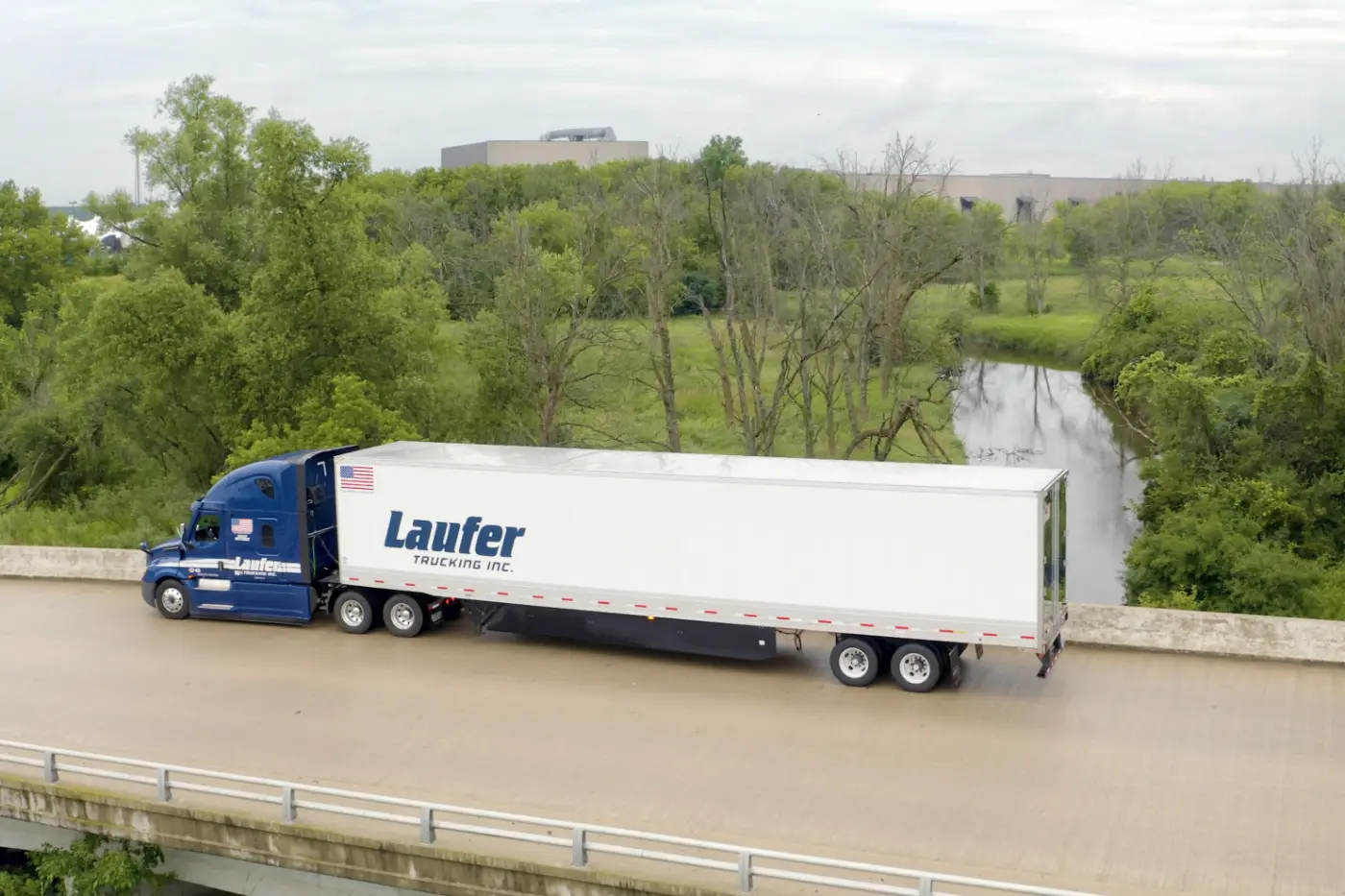
A bridge law ties the maximum legal weight a truck can carry to how its axles are spaced. The more spread out the axles, the more weight the vehicle can legally haul, because the load is distributed across more of the road and bridge structure. The federal version, called the Bridge Formula, governs interstate highways nationwide, and individual states layer their own axle and seasonal rules on top.
For anyone moving freight in Wisconsin, the practical questions are how much weight a trailer can legally carry, how axle spacing and tandem position affect that, and when seasonal restrictions change the rules. This guide explains the federal bridge formula, the standard axle and gross weight limits, and Wisconsin's specific seasonal weight rules. Every figure below is drawn from federal regulation and the Wisconsin Department of Transportation.
What is the federal bridge formula?
The federal Bridge Formula is a calculation that sets the maximum allowable weight on any group of consecutive axles based on the number of axles and the distance between them. Congress enacted it in 1975 to protect bridges: as trucks grew heavier, the solution was to tie allowable weight to axle count and spacing rather than letting weight concentrate over a short span. A load spread across a longer distance puts less stress on a bridge than the same weight bunched together.
The formula itself is W = 500 [LN/(N-1) + 12N + 36], where W is the allowable gross weight on a group of axles, L is the distance in feet between the outer axles of the group, and N is the number of axles in the group. The takeaway for a shipper does not require running the math: a truck can only reach the maximum legal weight if its axles are both numerous enough and spaced far enough apart. Shorter trucks with fewer axles are legally limited to less.
What are the federal axle and gross weight limits?
On interstate highways, federal law sets three baseline limits that apply alongside the bridge formula. These are the numbers most freight is planned around.
| Limit | Federal maximum (interstate) |
|---|---|
| Single axle | 20,000 lb |
| Tandem axle | 34,000 lb |
| Gross vehicle weight | 80,000 lb |
A single axle is one or more axles whose centers are 40 inches or less apart. A tandem axle is two or more consecutive axles spaced more than 40 inches but not more than 96 inches apart. These single and tandem limits override the bridge formula for closely spaced axles, and in no case may a vehicle exceed 80,000 pounds gross. There is one important exception built into the rule: two consecutive sets of tandem axles may each carry 34,000 pounds if the distance between the first and last axle of those tandems is 36 feet or more, which is what allows a standard five-axle semi to reach the full 80,000 pounds legally.
The practical effect is that axle count and spacing, not just engine power, decide how much a truck can legally carry. A standard five-axle tractor-trailer is engineered around these numbers: a steer axle, a tractor tandem, and a trailer tandem, spaced to carry 80,000 pounds within both the axle limits and the bridge formula. A shorter rig with fewer axles, or one with its axles bunched closer together, is legally capped well below 80,000 pounds even if it could physically carry more. That is the bridge formula doing its job, protecting the road structure by spreading heavy loads out.
How do trailer tandems affect weight compliance?
Gross weight is only half of legal compliance. A truck can be under 80,000 pounds total and still be illegal if too much of that weight sits over a single axle group. That is why how the load is distributed matters as much as how much it weighs. A trailer loaded heavily toward the front or rear can overload one axle group while another runs light, putting the truck out of compliance even at a legal gross weight.
This is where trailer tandems come in. The tandem axles under the rear of a trailer can usually be slid forward or backward along a track. Moving the tandems changes how much of the load they carry versus the tractor's drive axles, which lets a driver redistribute weight to bring each axle group within its limit without changing the total load. It is a routine adjustment, and it is often the difference between passing a weigh station and getting cited.
How do you slide tandems to stay legal?
Sliding the tandems shifts weight between the trailer axles and the tractor's drive axles. Moving the tandems forward shifts weight off the trailer tandems and onto the drive axles; moving them back does the opposite. A driver who finds the drive axles overweight at a scale slides the tandems forward to move weight back onto the trailer group, and vice versa.
The constraint is that sliding tandems also changes the effective axle spacing, which feeds back into the bridge formula and into state length rules. So there is a working range, not unlimited adjustment. An experienced driver knows roughly where the tandems need to sit for a given load before reaching the scale, and adjusts from there. Getting it right is part of the everyday craft of running legal, which a carrier that knows its lanes and equipment handles as a matter of routine.
What are Wisconsin's seasonal weight limits?
Wisconsin adds a seasonal layer on top of the federal limits, and it materially changes what is legal at certain times of year. During the spring thaw, when frost leaving the ground leaves pavement at its weakest, the Wisconsin Department of Transportation imposes Class II road restrictions on roughly 1,400 miles of state highway, about 12 percent of the system, that are susceptible to damage from heavy trucks.
On Class II roads, standard legal loads are usually still allowed, but most overweight permits are suspended for the duration of the spring thaw, so permitted heavy loads must find routes that avoid those segments. On the smaller set of posted roads, the most vulnerable stretches, the limits drop below standard legal weight: commonly six tons per single axle, ten tons per tandem (axles under eight feet apart), and 24 tons gross, with those limits physically posted on signs. Local county, town, city, and village roads can carry their own posted restrictions set by local government.
| Wisconsin spring posted-road limit | Typical figure |
|---|---|
| Single axle | 6 tons (12,000 lb) |
| Tandem axle (under 8 ft apart) | 10 tons (20,000 lb) |
| Gross weight | 24 tons (48,000 lb) |
The timing varies year to year and by zone as frost conditions change, typically running from late winter into spring, and WisDOT maintains an interactive map showing which segments are currently restricted. A Wisconsin-based carrier plans around these postings as part of normal operations rather than discovering them at a posted sign.
What happens if you violate weight laws?
Overweight violations are caught at fixed and portable scales, and they carry fines that typically scale with how far over the limit a vehicle is. Beyond the fine, an overweight truck may be held until the load is brought into compliance, which means delays and added cost. Repeated violations affect a carrier's safety record, which shippers can see, so weight compliance is both a legal and a reputational matter.
The reliable way to avoid all of it is to load correctly, distribute weight across the axle groups, and know the seasonal restrictions on the planned route before the truck rolls. For how legal dimensions and weight interact with the equipment itself, our guide to semi truck trailer types covers the trailers these limits apply to, and the heaviest, most weight-sensitive freight tends to ride on open flatbeds and step decks.
Why a Wisconsin carrier's knowledge matters
Federal weight law is the same everywhere, but the seasonal postings, the vulnerable lanes, and the local road restrictions are specific to Wisconsin, and they change with the season. A carrier that runs Wisconsin every week knows which routes get posted in spring, how to keep a load legal across the axle groups, and how to plan around restrictions before they cost a delay. Laufer is an asset-based, family-owned carrier based in Hartford that runs Wisconsin and the regional Midwest as its home footprint. For the full picture of what it hauls, the Wisconsin trucking services overview lays it out.
Move heavy freight with a carrier that knows the rules
If you are moving heavy or weight-sensitive freight in or through Wisconsin, the carrier's knowledge of axle limits and seasonal restrictions protects you from delays and citations. Call Laufer at (262) 673-6810 with your origin, destination, weight, dimensions, and pickup window, and we will plan a legal, compliant move and work the rate from there.