Drop Trailer Programs: How They Work and What They Cost

20 Nov 2026
How a drop trailer program works, what a shipper needs at the dock, who qualifies, and how drop trailers are priced and agreed.
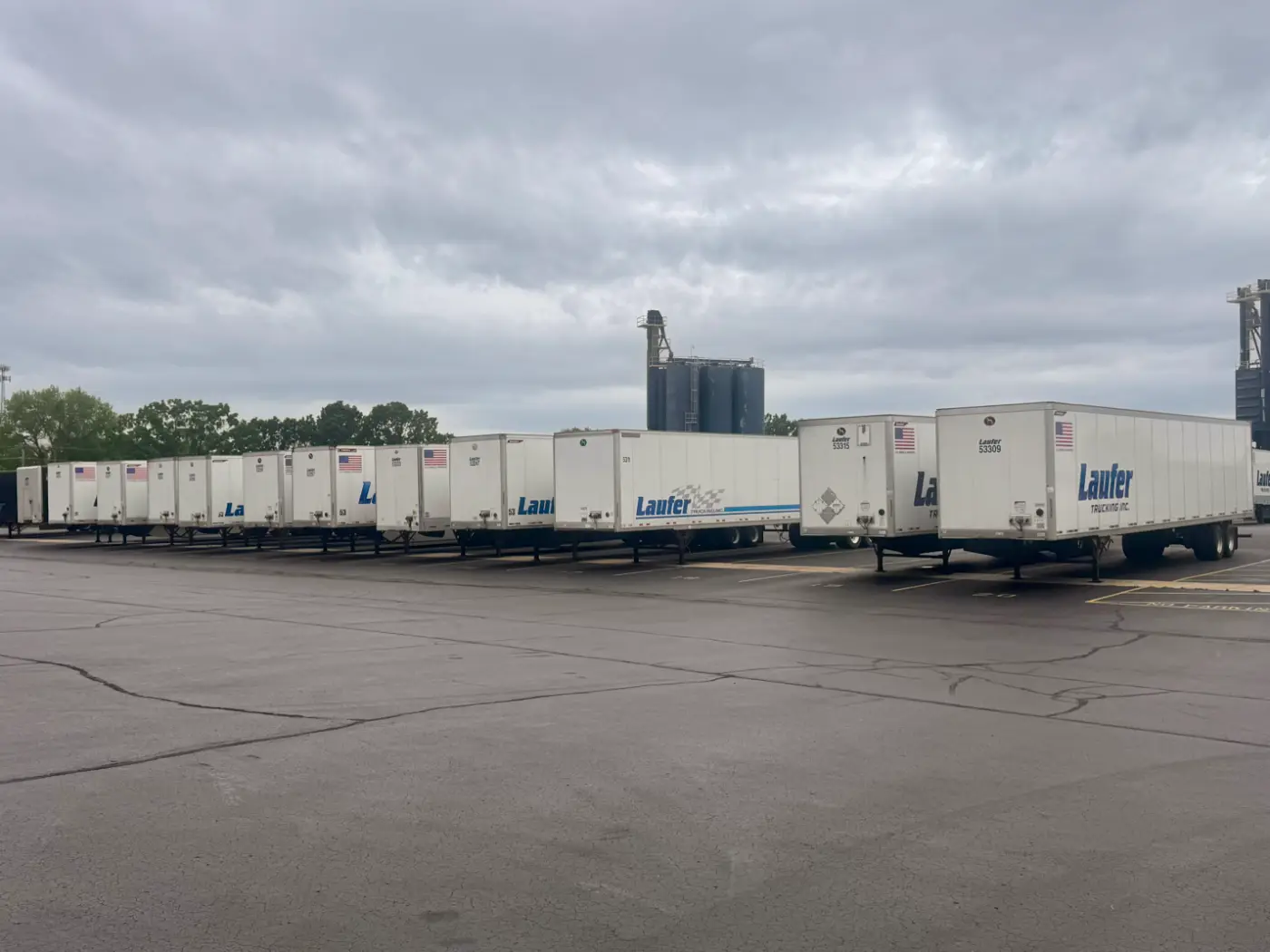
Every live load puts two clocks on your dock: the driver's and your crew's. The truck waits while the trailer is loaded, detention starts once the free time runs out, and the next truck in line waits behind it. A drop trailer program takes the waiting truck out of the picture, so your dock loads to your schedule instead of the truck's.
Drop trailers aren't something a carrier switches on for every shipper who asks, though. This article details when a drop trailer program makes sense for the carrier and the customer.
What is a drop trailer?
A drop trailer is a trailer a carrier leaves at a shipper's or receiver's facility so it can be loaded or unloaded without a truck waiting. Once it's loaded, a driver collects it and leaves an empty in its place. It moves as part of a regular freight rotation, which is what a drop trailer program is: the same lane or a group of lanes, the same customer, trailers cycling through on a schedule.
Two things it may get confused with:
- A drop deck trailer is something else entirely. That's an open-deck trailer with a lowered deck, also called a step deck, used for taller freight.
- A storage trailer stays put. It sits on your property to hold excess inventory and isn't part of a freight rotation. If that's what you need, storage trailer rental works differently.
How a drop trailer program works
- The carrier spots an empty trailer at your dock.
- Your crew loads it when production and dock staff are ready, or as product comes off the production line.
- A driver arrives with another empty, drops it, hooks to the loaded trailer and leaves.
- The cycle repeats on the schedule you've agreed.
The swap itself takes a fraction of the time a live load does. The benefits of drop and hook trucking, from the driver's side and the dock's, are worth knowing if you're comparing it with live loading.
What a shipper needs for a drop trailer program
Most of what decides whether a drop trailer works happens at your facility, not the carrier's.
- A dock the trailer can occupy. The simplest setup is a dock door the drop trailer can sit at all the time. If you can't spare one, you need a way of moving the trailer in and out of the dock yourself, such as a yard truck.
- Somewhere to park it. The trailer needs a spot where it won't sink into the ground or damage the asphalt it's parked on. A loaded trailer resting on its landing gear puts a lot of weight on a small area, and soft ground or thin blacktop gives way under it.
- A drop lot, if you have one. Some facilities have a pad or drop lot set up for loaded trailers, with a concrete area for the landing gear to rest on. It helps, but it isn't a requirement.
- Enough freight to keep it moving. A drop trailer only makes sense if it's loaded and pulled regularly. A trailer that would sit half-full for weeks is closer to storage than to a drop program.
Who qualifies for a drop trailer program?
A carrier typically weighs a drop trailer request on three things.
Trailer availability. This comes first. A drop trailer is a trailer taken out of general circulation and committed to one customer. If a carrier's trailer capacity is tight, the drop trailer program may need to wait until it has more trailers available.
Volume and rate. Once a trailer is free, the question is whether the freight justifies it: how many loads the trailer will carry, and the rate on those loads. There's no single minimum. Every shipper's arrangement is different, so the carrier will have to evaluate if the volume and rate justify the time period the trailer will remain idle.
Network fit. Finally, the loads being offered to the carrier must fit with that carrier's geographical network.
If the answer is not yet, it usually means one of those three hasn't lined up, not that the door is closed. Trailer availability in particular changes over time.
What does a drop trailer program cost?
A drop trailer program doesn't usually come with a price list. It's priced as part of the freight it supports, so the cost depends on the arrangement:
- Built into the rate. Where the volume justifies a committed trailer, the cost of keeping it at your dock is usually covered by the freight rate on the loads it carries.
- Charged separately. Where volume is lower, or the trailer would sit idle for long stretches between loads, a separate charge for the trailer is more likely.
The other side of the cost is what the program saves. Without a truck waiting at the dock, there's little or no detention to pay when loading runs long, no scramble to hit a tight appointment, and fewer trucks waiting in line for a dock spot.
The drop trailer agreement
Many drop trailer arrangements run on a verbal agreement, and some are written into a contract. Either way, a few things are worth both sides being clear on before the first trailer arrives:
- How many trailers are in the program, and how often they're swapped
- How long a trailer can sit before it's expected to be loaded and pulled
- Who's responsible for the trailer while it's on your property
- What happens if a trailer is damaged
A drop trailer can also run as part of a dedicated trucking arrangement, so a loaded trailer is waiting every time the committed truck arrives.
How Laufer runs drop trailers
Laufer is a family-owned, asset-based carrier in Hartford, Wisconsin, running since 1977. We own our trailers, which is what makes spotting one at your dock possible in the first place.
Our drop trailers are 53-foot dry vans. We have them at customers in the Hartford area, a few around Wisconsin, and some in other states, and how far we'll run a program depends on the customer and the volume. A few customers with their own trucks and power units come to our yard to drop and hook trailers as they need them, which can work well for a shipper close to Hartford.
Every request is weighed the same way: whether we have trailers to commit, then the volume, the rate and how the freight fits our network. Because trailer availability changes, the first step is always the same: contact us for availability.
Call Laufer at (262) 673-6810 with what you ship, how often, and where it's going, and we'll tell you honestly whether a drop trailer program makes sense. If you'd rather put it in writing, you can request a drop trailer quote online.
Frequently Asked Questions
A drop trailer is a trailer the carrier leaves at a facility so it can be loaded or unloaded without a truck waiting. When it's ready, a driver swaps it for an empty and takes it away. It's part of a regular freight rotation between a carrier and a shipper, rather than a one-off delivery.
No. A drop trailer describes how a trailer is used: left at a dock to be loaded, then collected. A drop deck trailer is a type of open-deck trailer with a lowered deck, also called a step deck, built for taller freight. A drop trailer is usually a dry van.
A dock door the trailer can occupy, or a way to move it in and out of the dock yourself, and firm ground to park it on that won't sink or crack under a loaded trailer. A concrete drop pad helps but isn't required. You also need enough regular freight to keep the trailer cycling.
Not a fixed one. A carrier weighs the number of loads against the rate on those loads and how they fit its network. A shipper loading a trailer every few days is a realistic candidate. One that might fill a trailer once a month is usually asking the carrier to park an asset for weeks.
Not always. Many drop trailer arrangements run on a verbal agreement, and some are put into a contract. Either way, it's worth agreeing how many trailers are involved, how long one can sit, who's responsible for it on your property, and what happens if a pickup is delayed.
A drop trailer is meant to keep moving, so it's not the right fit for holding stock long-term. If you need a trailer that stays put and holds inventory, that's a storage trailer, which is rented and billed differently.
It depends on the customer and the volume. A carrier commits trailers where the lane fits its network. Laufer runs drop trailers in the Hartford area, at a few sites around Wisconsin, and at some in other states.
Usually it means the timing isn't right, not that it never will be. The most common reason is trailer availability: a carrier with every trailer committed has to wait until it adds equipment or a large job winds down. Volume and rate can be revisited as your freight grows.