What Is Drop and Hook Trucking?

09 Sept 2026
Drop and hook means a driver drops the trailer they arrived with and hooks to one that is already loaded and waiting, then leaves. Nobody sits at a dock while freight is loaded.
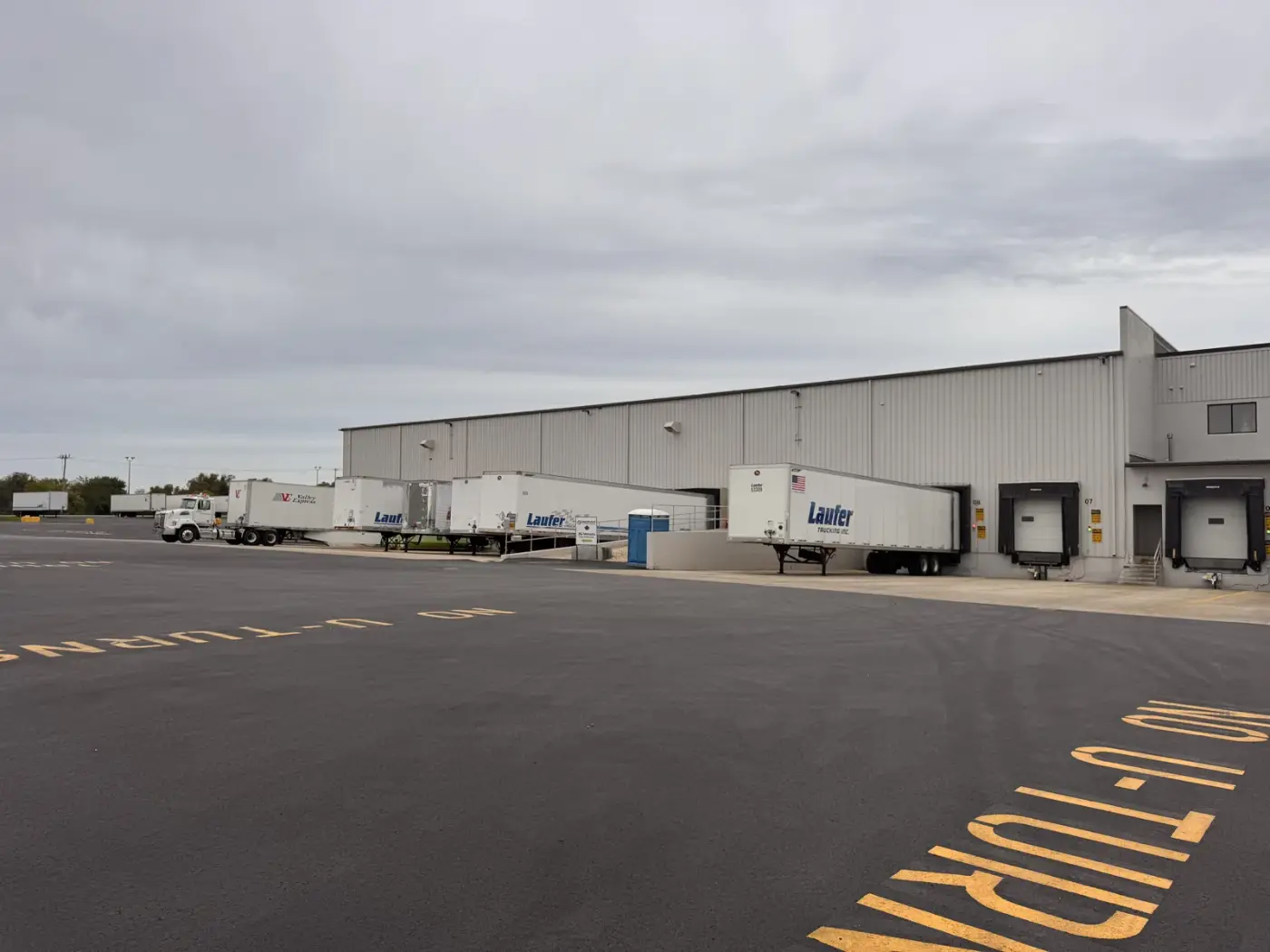
Drop and hook means a driver drops the trailer they arrived with and hooks to one that is already loaded and waiting, then leaves. Nobody sits at a dock while freight is loaded. It turns a stop that might take three hours into one that takes under an hour, and it only works when the carrier can leave trailers at the customer.
That last condition is the whole story. Drop and hook is not a service a carrier switches on, it is an arrangement that depends on trailers being available to park somewhere they are not earning anything. This guide covers how it works, what it does for a shipper, what it costs the carrier, and when it is the right answer.
What does drop and hook mean in trucking?
It describes a load where the trailer and the tractor separate. The driver arrives, drops the trailer they brought, hooks to a different trailer that has already been loaded, and pulls out. The loading happened hours or days earlier on the shipper's own schedule, with no truck waiting on it.
The alternative is a live load. The driver backs into a dock, stays with the trailer, and waits while it is loaded or unloaded. That wait commonly runs one to three hours and can run far longer at a busy facility.
How does a drop and hook load work, step by step?
The mechanics are simple, which is part of the appeal. The carrier spots an empty trailer at the customer's facility, often days ahead. The customer loads it whenever it suits their production and their dock staff. When it is ready, a driver arrives with another trailer, drops it in the yard for the next load, hooks to the loaded one, does a pre-trip inspection, and leaves.
For this to run continuously, there must be more than one trailer in the arrangement. One is at the customer being loaded while another is on the road. That pool of trailers is what makes drop and hook possible, and a facility also needs somewhere to park them. Without spare trailers and spare yard (or dock) space, the arrangement cannot work no matter how much both sides want it.
It is not always instant. If the loaded trailer is buried behind other equipment, parked at the far end of a yard, or stored offsite, the driver can still lose time. The difference is that this is an occasional problem rather than the default condition of every stop.
Drop and hook vs live load: what actually changes
| Factor | Drop and hook | Live load |
|---|---|---|
| Typical time at the facility | Under an hour | One to three hours, sometimes more |
| Who sets the loading schedule | The shipper, on their own time | The appointment, and the truck waiting |
| Trailers required | At least two in the arrangement | One |
| Yard space needed | Room to park spotted trailers, or a dock dedicated to the drop trailer | A dock door |
| Who loads | The customer, unsupervised by a driver | The customer, with the driver present |
| Detention exposure | Low | Real, and rises with dock congestion |
What a drop trailer does for a shipper
It removes the clock. A facility that loads into a spotted trailer loads when its production finishes, when its dock crew is free, and across a shift rather than inside an appointment window. Freight that is slow to load, like loose floor-loaded cartons or anything hand-stacked, stops being a scheduling problem.
It also solves floor space, which is the reason a lot of customers ask in the first place. A trailer in the yard is storage that moves. Finished goods can come off the line into the trailer instead of taking up warehouse floor while they wait for a truck.
The third benefit is the one that compounds. Detention exposure drops close to zero, because there is no driver waiting on the dock for a clock to start. This is one place where owning the equipment matters plainly: a carrier that does not own its trailers, or the resources to own extra trailers cannot spot one at your dock. If a drop trailer is important to you, you need to ensure your carrier is capable.
What a drop trailer costs the carrier
This is the part that explains everything else, and it is rarely said out loud.
A trailer parked at a customer's dock is a trailer earning nothing anywhere else. It is a real asset with a purchase price, registration, insurance and maintenance behind it, and while it sits in a yard being loaded it is not under a load. A carrier committing trailers to a drop program is choosing to take equipment out of circulation, which only makes sense when the trailer turns often enough to justify the time it spends idle.
That is why drop trailer service is not a switch a carrier flips for every customer who asks. It is a calculation about how frequently the trailer will cycle, the distance it will travel once loaded, and the rate of the load. A customer loading two trailers a week is a realistic scenario for a drop trailer. A customer who might load one a month is asking the carrier to park an asset for thirty days, and the honest answer there is usually no, or not yet.
None of that is a reason to avoid asking, the conversation is always open when working with Laufer.
When drop and hook does not make sense
Three situations rule it out, and they are worth checking before the conversation starts.
No yard or dock space. This is the most common roadblock, and it has nothing to do with the freight.
Volume too low or too irregular. Covered above. The trailer has to have a regular rotation of loads to be a smart investment for the carrier.
The freight needs a driver present. Some loads need eyes on how they are loaded and secured, particularly open-deck freight where securement is the driver's legal responsibility. That is a real constraint rather than a preference. Also, due to the expense and specialized nature of certain types of open deck trailers capacity is typically limited, meaning the carrier will need the trailer to be on the road whenever possible.
What drop and hook means for the driver
It means a shorter, more predictable day. An hour saved at each end of a run is an hour of driving time that stays available under the hours-of-service rules, and time spent waiting at a dock is on-duty time that burns the fourteen-hour window whether the truck moves or not.
It is also no-touch freight in most cases, since the loading happened without the driver there. That matters more to some drivers than others, and it is a common thing to ask about when comparing carriers. At Laufer, drop and hook is a line item in the regional pay structure alongside mileage, stop pay and overnight pay, so the work is compensated rather than simply assumed. How that structure differs between regional and local work is worth understanding before you compare offers. Current openings are on the careers page.
Can you drop and hook a flatbed or a Conestoga?
Almost everything written about drop and hook assumes a dry van at a distribution center. Open deck works differently and the answer is more nuanced.
A flatbed can be spotted and pre-loaded, but securement is the responsibility of the driver hauling it, and a driver generally has a say in the placement of the load on the trailer. In some cases a drop open deck trailer is feasible, but this is typically when the freight is always the same or there is a special circumstance. It is generally not a typical or ongoing arrangement.
A Conestoga sits in between. It is an open deck with a rolling cover, so it loads from the side or the top like a flatbed and arrives protected like a van. The freight can be positioned in advance and the cover rolled over it, though securement is still managed by the driver taking it.
The short version: dry van drop and hook is generally a simple arrangement, open deck drop and hook is possible in some cases but the driver still needs to handle the securement.
How Laufer's drop trailer program works
Drop trailer service is one of our biggest differentiators, and it works simply. We spot a Laufer dry van at your dock, you load it at your convenience, and we pull it when it is ready. A pool of our trailers solves your floor space and dock door problem instead of adding to it.
Drop trailers are evaluated case by case, based on the expected activity level of the trailer. As with all business arrangements drop trailers must be mutually beneficial, and therefore is not a guarantee that every customer will be eligible for a drop trailer program.
Ask about a drop trailer at your dock
Laufer runs 53’ dry vans, flatbeds, step decks and Conestogas out of Hartford, Wisconsin, hauling steel coils, bagged minerals, stamped parts, paper rolls and corrugated products across Wisconsin, Chicagoland and the Midwest. We own our equipment, which is what makes spotting a trailer at your dock possible in the first place.
Tell us what you ship and how often, and we will tell you honestly whether a drop trailer makes sense. The rest of the fleet is here.