Pre-Trip Inspection Checklist for Truck Drivers

16 Nov 2026
A zone-by-zone pre-trip inspection checklist for truck drivers, what the federal rules require, and the extra checks that come with flatbed and conestoga work.
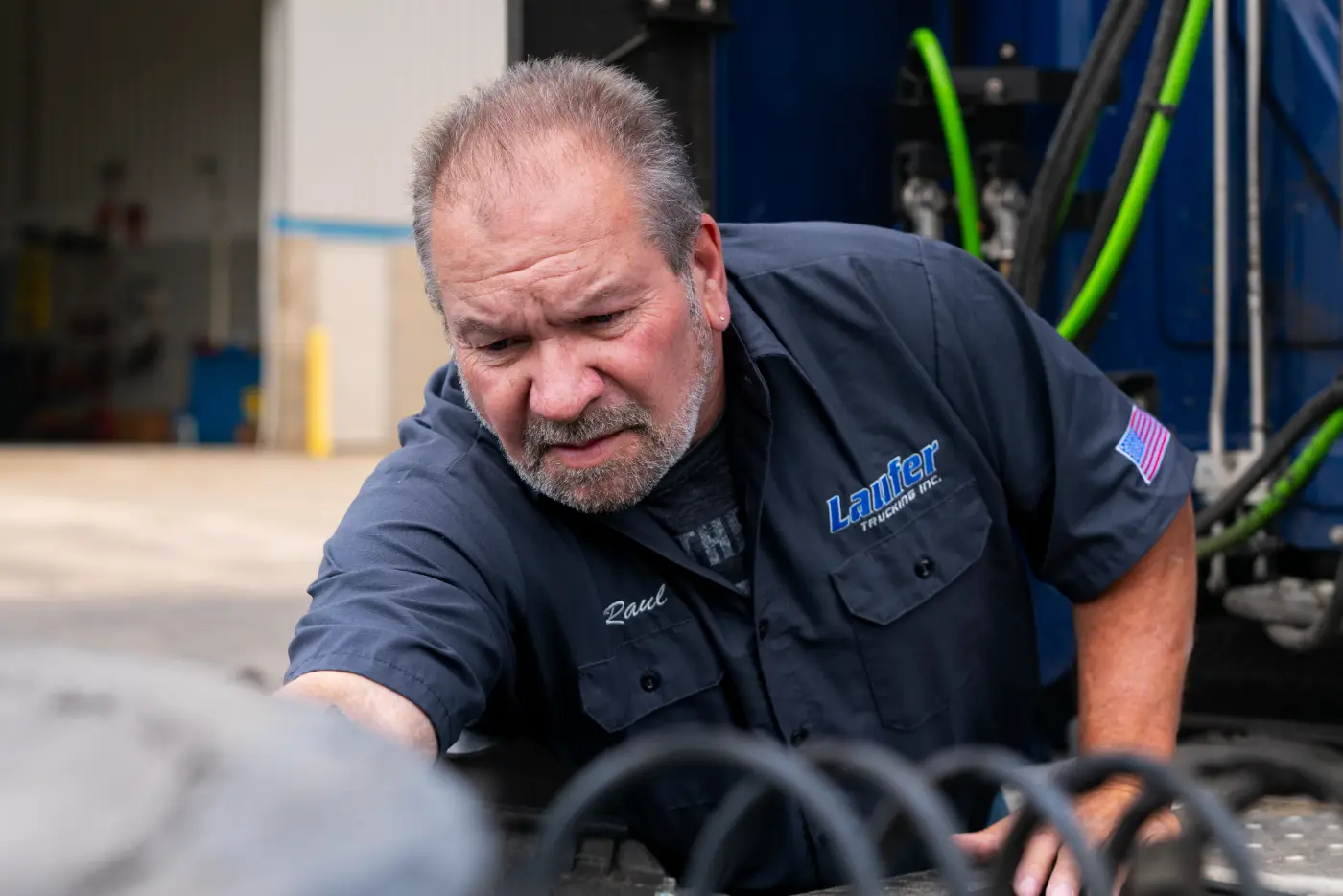
A pre-trip inspection checklist is the walk-around a truck driver works through before every trip to confirm the truck and trailer are safe to drive. It covers the cab and paperwork, engine compartment, lights, tires and wheels, brakes and air system, coupling and trailer. Federal rules put that responsibility on the driver.
What is a pre-trip inspection, and who is responsible for it?
A pre-trip inspection is a hands-on check of the truck and trailer before driving. Under 49 CFR 396.13, the driver must be satisfied the vehicle is in safe operating condition before driving it. If the last driver vehicle inspection report (DVIR) listed defects, the driver also reviews it and signs to confirm the repairs were certified.
The carrier is responsible for fixing reported defects, and the final decision on whether the equipment is safe lies with the driver.
Drivers hauling open-deck (flatbed) equipment have additional responsibilities to ensure the cargo is secured properly. Under 49 CFR 392.9, the driver must check the cargo and its securement within the first 50 miles of a trip, then again at every change of duty status, every 3 hours or every 150 miles, whichever comes first.
How long does a pre-trip inspection take?
There is no set amount of time a pre-trip inspection should or is required to take. A driver must use their discretion and allot a reasonable amount of time to go through the necessary checks. A good rule of thumb would be a minimum of ten minutes, but that is a suggestion, not a rule or requirement. It is logged as on duty, not driving: federal hours-of-service rules count time spent inspecting a commercial vehicle as on-duty time.
The pre-trip inspection checklist, zone by zone
Develop a consistent routine when conducting pre-trip inspections by working around the truck in the same order each time. A systematic approach promotes consistency, reinforces good inspection habits, and supports a thorough inspection process.
- In the cab and paperwork
- Registration, proof of insurance, annual inspection record, shipping papers for the load, and a working ELD.
- Emergency equipment: fire extinguisher charged and secured, three reflective warning triangles, spare fuses if your truck uses them.
- Seat belt latches and isn't frayed. Mirrors clean and adjusted. No windshield cracks in your line of sight. Wipers and washer work.
- Horn, heater and defroster work. Gauges read normally once the engine is running, and no warning lights stay on.
- If the last DVIR listed defects, check the repairs were signed off.
- Engine compartment, engine off
- Oil, coolant, power steering and washer fluid at the right levels, with no fresh leaks under the truck.
- Belts not cracked or frayed. Hoses not cracked, bulging or leaking.
- Air compressor, alternator and water pump mounted securely. Wiring not loose or chafed.
- Front of the tractor and steering
- Headlights, high beams, turn signals, clearance lights and reflectors working and clean.
- Steering box and linkage secure, with no missing nuts or cotter pins and no leaks.
- Front springs, shocks and mounts not broken or missing.
- Tires, wheels and brakes, every axle
- Tires at the right pressure, with no cuts, bulges or exposed cords. Tread depth at least 4/32 inch on steer tires and 2/32 inch on the rest.
- Wheels and rims not cracked. No missing or loose lug nuts, and no rust streaks around them, which point to a loose nut.
- Hub seals not leaking.
- Brake drums or rotors not cracked, linings not worn thin, slack adjusters and pushrods at the right stroke, air lines and chambers not leaking or rubbing.
- Both sides of the tractor
- Fuel tanks secure, caps on, no leaks. Battery box secure. No exhaust leaks or soot at the joints.
- Frame and crossmembers not cracked or bent. Mud flaps in place. Steps and grab handles solid.
- Side marker lights and reflectors working.
- Coupling
- Fifth wheel jaws locked around the kingpin, release handle in the locked position, and no gap between the fifth wheel and the trailer.
- Fifth wheel plate greased and mounting bolts tight.
- Air lines and glad hands connected and sealed, electrical line plugged in, and enough slack for turns without dragging.
- Landing gear fully raised, crank handle stowed.
- Tug test: trailer brakes set, pull gently forward in low gear to prove the coupling holds.
- Trailer and rear
- Trailer frame, crossmembers and floor or deck in good condition.
- Tail, brake, turn and clearance lights working. Reflective tape clean and intact.
- Rear impact guard secure. On a dry van, doors closed and latched.
- Trailer tires, wheels and brakes checked as in step 4.
- Air brake check, engine running
- Release the trailer parking brake before doing the walk-around. This allows a driver to hear audible air leaks.
- Build air and check the governor cuts out where it should.
- With the engine off, check air loss with the brakes released and then applied.
- Fan the brakes down to check the low-air warning comes on and the spring brakes set.
- Test the parking brake and trailer brakes, then roll forward slowly and brake to check the truck stops straight.
The pressures and leak-rate limits for your truck are in the CDL manual you trained on and in your carrier's procedures. Use those numbers rather than a generic list.
Flatbed and conestoga checks
On a flatbed or conestoga, the load and everything holding it down are part of the inspection. Before rolling, check:
- Straps: no cuts, tears, burns, knots or broken stitching, and the working load limit label still readable.
- Chains and binders: no cracked or stretched links, and binders latched and secured so they can't open.
- Winches and rails: winches locked, and the winch track and stake pockets not bent or cracked.
- Edge protection: in place wherever a strap crosses a sharp edge.
- Bulkhead: secure, with no cracked welds.
- Deck: boards not broken or rotted, and no loose dunnage left from the last load.
- Tarps: tied down with no loose ends that can flap, and no tears that let weather in.
- Conestoga cover: rolls freely, curtains and bows undamaged, rails clear, and the tarp-and-curtain system locked and tensioned at both ends.
- Tiedown count: federal rules set a minimum number of tiedowns by the length and weight of each article, and the combined working load limit must be at least half the cargo weight (49 CFR 393 cargo securement rules).
Then stop within the first 50 miles and check it all again. Straps and chains loosen as a load settles.
From the driver's seat, a flatbed and a conestoga work quite differently, and Laufer's conestoga trailers and flatbed trailers each come with their own specs.
Winter pre-trip checks
Cold mornings add their own list:
- Drain the air tanks if your truck doesn't do it automatically. Water in the air system freezes.
- Clear ice and snow from the glad hands before coupling, and check the seals haven't cracked in the cold.
- Clear snow and road salt off lights, reflectors and plates.
- Clear the windshield, mirrors and wipers, and use washer fluid rated for freezing temperatures.
- Check the brakes release after the truck has sat overnight. Brake shoes can freeze to the drums.
- Clear snow and ice off the deck, tarps and conestoga roof before leaving the yard. It comes off at highway speed.
- Use winter fuel additives as required by the temperature conditions.
- Double check the fifth wheel is locked. Grease gets stiff in cold weather.
Above all, always allow yourself extra time. Things move slower in the winter, and rushing causes problems.
What to do when you find a defect
If the defect affects safety, the truck doesn't go until it's fixed. Federal rules forbid operating a vehicle in a condition likely to cause a crash or breakdown.
Report it in writing or on your ELD. Since 2014, drivers of property-carrying trucks only have to file a DVIR when they find or are told about a defect (49 CFR 396.11). The carrier repairs the defect and certifies the repair before the truck is dispatched again, and the next driver reviews and signs that report. In today's world this is all handled electronically through our ELD system.
Depending on the defect and when it is discovered, a Laufer driver can also report it in person or over the phone to the maintenance department, in addition to the DVIR. The maintenance department responds as the severity of the defect requires.
The CDL test pre-trip vs the daily pre-trip
The pre-trip on the CDL skills test is a spoken walk-around. You point to each part and name what you are checking for, which teaches you the truck. The daily pre-trip is quieter and quicker, but it comes with a load, the weather and a schedule, and the truck you're checking is the one you'll drive all day, or all week.
If you're still in your first year as a CDL driver, there's more to get used to than the pre-trip. At times Laufer hires drivers with limited CDL-A experience. The recent CDL graduates page explains what to expect at the start of your trucking career.
What new drivers miss most
We don't see drivers bending over and checking their lug nuts and rims often enough. You want all the lug nuts to be tight and no cracks in the rims.
Checking tire pressure the right way is particularly important. Using a hammer or a tire pressure gauge is how you find a low tire, not kicking them. Finding a low tire in your pre-trip or post-trip can save a tremendous amount of hassle and expense in the near future.
Drive with a carrier that takes the pre-trip seriously
A careful pre-trip is one of the first habits Laufer's trainers look for. Joe Volz, Laufer's driver trainer, spends three to four weeks with each new driver. If you have at least 12 months of CDL-A experience and want open-deck work, see flatbed trucking jobs at Laufer or all current openings.
Frequently Asked Questions
Yes. Federal rule 49 CFR 396.13 requires the driver to be satisfied a commercial vehicle is in safe operating condition before driving it. The rule doesn't prescribe a written checklist, but carriers expect a full walk-around, and roadside inspectors cite defects a proper pre-trip would have caught.
The driver. The regulations place the duty on the person about to drive, even when someone else drove the truck the day before or a shipper loaded the trailer. The carrier is responsible for repairing defects once they are reported.
Before every trip, which in practice means at the start of every shift and whenever you take over a different truck or trailer. Drivers who swap trailers during the day, such as on drop and hook runs, check each new trailer before pulling it.
Yes. Federal hours-of-service rules count time spent inspecting a commercial vehicle as on-duty time. Log it as on duty, not driving. It counts toward the 14-hour window but not the 11-hour driving limit. It is very important to show time on duty for your pre-trip. Without that, the assumption is that you didn't do it.
The check a driver does at the end of the day, looking for anything that went wrong during the run. It feeds the driver vehicle inspection report. If the driver finds or is told about a defect, the report records it so the carrier can repair it before the truck goes out again.
A driver vehicle inspection report: the written or electronic record of defects found on a truck or trailer. For property-carrying trucks, a DVIR is required when a defect is found or reported. The carrier certifies the repair, and the next driver reviews and signs the report.
Not one that makes the truck unsafe or likely to break down. Federal rules forbid operating a vehicle in that condition. Minor defects that don't affect safety still get reported so they are fixed, and when you aren't sure, ask before you roll.
A check that the tractor is properly coupled to the trailer. With the trailer brakes set, the driver pulls gently forward in a low gear. If the fifth wheel is locked around the kingpin, the tractor holds against the trailer. If it isn't, you find out in the yard instead of on the road.
Yes. Hooking to a trailer you didn't load doesn't change the rule. Check the coupling, lights, tires, brakes and trailer body before you leave, and on a dry van check the doors are secured. If a seal stops you seeing the load, record the seal number on your paperwork.
Within the first 50 miles, then at every change of duty status, or every 3 hours or 150 miles of driving, whichever comes first. The schedule comes from 49 CFR 392.9 and matters most on flatbeds and conestogas, where straps and chains settle as the load moves.
The test pre-trip is spoken: you name each part and what you are checking for, and you are scored on covering everything. The daily pre-trip covers the same systems on a working schedule, with a real load and the weather to deal with. The habits from the test are what make the daily one quick.
Federal rules don't require one, and many carriers record inspections on the ELD instead. A printed checklist helps newer drivers build a fixed route around the truck, and it is a useful reminder for checks you do less often, like winter items or a trailer type you haven't pulled in a while.