LTL, Partial, and FTL Shipping: What's the Difference and What Can Laufer Accommodate?

15 Jun 2026
LTL, partial vs FTL shipping explained: when to ship less-than-truckload, when to book a full truckload, the cost and speed trade-offs, and where partial fits.
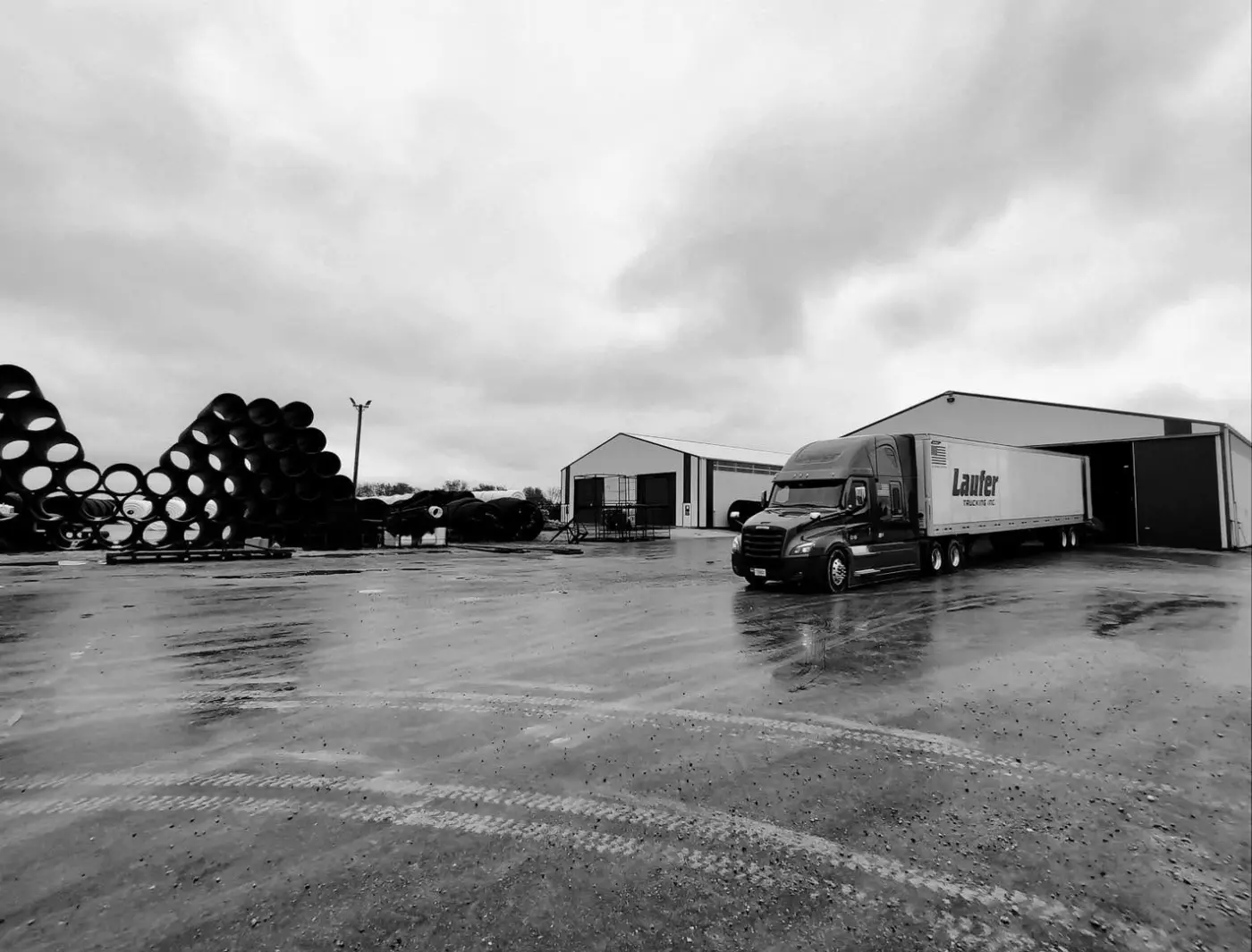
Quick answer: FTL (full truckload) means your freight fills, or pays for, an entire trailer and ships direct from pickup to delivery. Both LTL (less-than-truckload) and Partial mean your freight shares a trailer with other shippers' loads, so you are not paying for use of the full trailer. FTL is faster and handles freight less; LTL and partial is more cost effective for small shipments but slower with more possible handling. The right choice comes down to how big your load is, how fast it needs to arrive, and your budget.
If you are booking freight, "should I ship LTL or FTL?" is one of the first questions that decides cost and transit time. The terms get used constantly and explained rarely. This guide breaks down what each one means, where partial truckload fits between them, and how to choose the right mode for a given shipment.
What is FTL (full truckload) shipping?
Full truckload shipping means one shipper's freight takes up an entire trailer, or the shipper books the whole trailer even if the load does not completely fill it because they want their product to ship "dedicated". The freight is loaded at origin, the trailer travels direct to the destination, and it is unloaded there. Nobody else's freight rides along and no freight gets moved in the process.
That direct routing is the defining advantage. Because the trailer goes straight from A to B without stopping at terminals to add or drop other shipments, FTL is faster and more predictable, and the freight is handled far less, which matters for fragile or high-value loads. FTL is the right mode for large shipments, time-sensitive freight, and anything you would rather not have transferred between trailers along the way.
What is LTL (less-than-truckload) shipping?
Less-than-truckload shipping combines freight from several shippers into one trailer, so each shipper pays only for a portion of the trailer. LTL is generally viewed as up to six skids. If your shipment is too small to justify paying for a whole trailer, LTL lets you split the cost with everyone else whose freight is going a similar direction.
The trade-off is handling and time. LTL freight typically moves through a hub-and-spoke network: it is picked up, taken to a terminal, sorted, loaded with other freight, and often transferred between trailers more than once before it reaches the destination. That means more touches, more opportunities for damage, and longer, less predictable transit than a direct truckload run. LTL suits small shipments, usually in the range of one to six pallets, where the cost savings outweigh the slower, higher-touch journey.
Laufer is not an LTL carrier, but can occasionally accommodate LTL shipments in the Wisconsin and Illinois regions. Laufer's brokerage arm, LT2 Logistics can get quotes on shipping LTL anywhere in the US and Canada through our broad network of carrier options.
A note of caution about shipping LTL
LTL should only be used when cost is the most important factor, as LTL is the least expensive option. However, LTL is notoriously unreliable, and delivery dates are often missed. A shipper should have a flexible approach to their delivery expectations when shipping LTL. Even "guaranteed" delivery with LTL providers is not necessarily a guarantee.
LTL, Partial and FTL: the key differences
Here is the comparison side by side. Read down the columns to weigh the trade-offs for a given shipment.
| Factor | LTL (less-than-truckload) | Partial | FTL (full truckload) |
|---|---|---|---|
| Trailer use | Shared with other shippers' freight | Shared with other shippers' freight | Your freight only, whole trailer |
| Typical shipment size | Small, roughly 1-6 pallets | Generally 6-16 pallets | 17-28 pallets or shipper wants dedicated |
| Cost basis | Least expensive | More cost effective than FTL | Highest cost |
| Transit speed | Slower; terminal stops and transfers | Allow up to 5 business days | Faster; direct origin to destination |
| Handling / touches | More; sorted and transferred en route, possibly several times | May or may not need to be transloaded | Fewer; loaded once, unloaded once |
| Best for | Small loads where cost matters most | Shipments too large to go LTL but not time sensitive | Large, time-sensitive, or fragile freight |
The pattern is consistent: LTL trades speed and low handling for a lower price on small loads, while FTL trades a higher price for speed, predictability, and fewer touches. Most freight decisions come down to where your shipment sits on that line.
What is partial truckload (PTL), and where does it fit?
Partial truckload sits between LTL and FTL. It is for freight that is bigger than a typical LTL shipment but still does not need, or want to pay for, an entire trailer. With partial truckload, your freight shares the trailer with only a few other large shipments rather than being routed through the full LTL hub-and-spoke system. Partial shipments are generally defined as 6-16 pallets.
The benefit is fewer touches than LTL at a lower cost than a full truckload. Because partial freight is not sorted and transferred through terminals the way LTL is, it tends to move more directly and get handled less, which can make it a strong middle option for medium-sized loads of six or more pallets that are not quite a full trailer. If your shipment is too big to go LTL but too small to fill a truck, partial truckload is worth asking about.
Laufer accommodates partial truckload to the following states: Wisconsin, Illinois, Indiana, Michigan, and Ohio. LT2 Logistics can provide pricing on partial truckloads to all other states.
When should you choose FTL over LTL?
Choose full truckload when any of these are true: the load is large enough to fill or nearly fill a trailer, the freight is time-sensitive and needs predictable transit, or the freight is fragile or high-value and you want to minimize handling. The more pallets you are moving, the more the economics tip toward FTL, because at a certain volume paying for the whole trailer costs less than paying LTL rates on each piece.
Choose LTL when the shipment is small, the timeline is flexible, and cost is the priority. For a few pallets that can tolerate extra days in transit and some handling, LTL is usually the economical answer. And when you land in the middle, too big for LTL to make sense, too small for a full trailer, that is exactly where partial truckload earns a look.
How long does a full truckload actually take?
A useful rule of thumb is around 500-600 miles a day, so a thousand-mile lane usually runs two to three days. That figure is not arbitrary. It falls out of the federal hours-of-service rules, which limit a driver to 11 hours of driving inside a 14-hour on-duty window, followed by 10 hours off.
Eleven hours at highway speed would suggest more than 500 miles. The gap is everything that is not highway: loading, unloading, fueling, scaling, traffic, weather, and waiting at docks. Time spent waiting at a receiver is on-duty time whether the truck moves or not, so a long queue does not just delay a delivery, it can consume driving hours meant for the next one. Difficulty finding parking is also a contributing factor, sometimes causing drivers to park earlier than they would need to based on their hours alone.
Shorter regional lanes work differently. A run inside Wisconsin or down into Chicagoland is usually same-day or next-day, and the constraint is dock hours at both ends rather than driving time.
How do cost and transit time compare?
On cost, LTL is priced by a combination of freight class, weight, dimensions, and distance, and it is cheaper for small loads because you share the trailer and transit time expectations are low priority. FTL is typically calculated based on miles or time invested for short trips, plus a fuel surcharge component. There is a crossover point where adding more LTL pallets eventually costs more than just booking a full truck.
Within that structure, four things move a truckload rate. The lane, not just the distance: a lane with freight moving both ways prices better than one where the truck comes back empty, because somebody pays for the empty miles either way. The equipment: a dry van, a flatbed and a Conestoga do not cost the same to run, and open-deck work carries securement labor a van does not. Timing and season: tight pickup windows and peak periods both tighten capacity, and capacity sets the market. What happens at the docks: detention and extra stops are added to the base rate rather than included in it, so a receiver that holds trucks for hours makes a lane more expensive to serve over time.
On time, FTL almost always wins because it travels direct. LTL transit is longer and harder to predict because the freight stops at terminals and may be transferred between trailers along the route. If a delivery date is firm, the predictability of a direct truckload run is often worth the higher rate.
Which trailer does a full truckload need?
Most general freight moves in a 53-foot dry van, but the trailer should follow the freight rather than the other way round. Laufer runs four types and each has a job.
Dry vans for anything palletized, boxed or bagged that needs to stay enclosed.
Flatbeds for steel, machinery and anything loading by crane or forklift from the side or above. Securement is the driver's legal responsibility here under the federal cargo securement rules, and on steel that is skilled work rather than a formality.
Step decks for freight too tall to travel legally on a standard flatbed, using a lower rear deck to gain height. Laufer also has step deck conestogas to accommodate difficult to tarp high loads.
Conestogas for freight that needs open-deck loading and enclosed protection at once. A rolling cover pulls back for side or overhead loading and closes over the load, which removes hand-tarping. Laufer's run 104 inches of inside height against the 96 common elsewhere.
How Laufer handles truckload freight
Laufer is an asset-based, family-owned full-truckload carrier based in Hartford, Wisconsin. When your freight needs a dedicated trailer running direct, Laufer owns the equipment and employs the drivers that move it, across dry van, flatbed, step deck, and Conestoga. Laufer generally does not run LTL freight, but can still get you a quote through our brokerage arm LT2 Logistics. For full truckloads or partial truckloads to our coverage area, that need to arrive on time and be handled once, Laufer is here to help.
Get a freight quote
If you are moving a full truckload in or through Wisconsin and the Midwest, call Laufer at (262) 673-6810 with your origin, destination, weight, dimensions, and pickup window, and we will work the rate from there. Not sure which trailer your freight needs? Our guide to semi truck trailer types can help, and once you have settled the mode, how to choose a trucking company walks through vetting a carrier.