What Does FCFS Mean in Trucking?

19 Aug 2026
FCFS stands for first come, first served. On an FCFS load there is no scheduled appointment window: the receiver works trucks in the order they arrive.
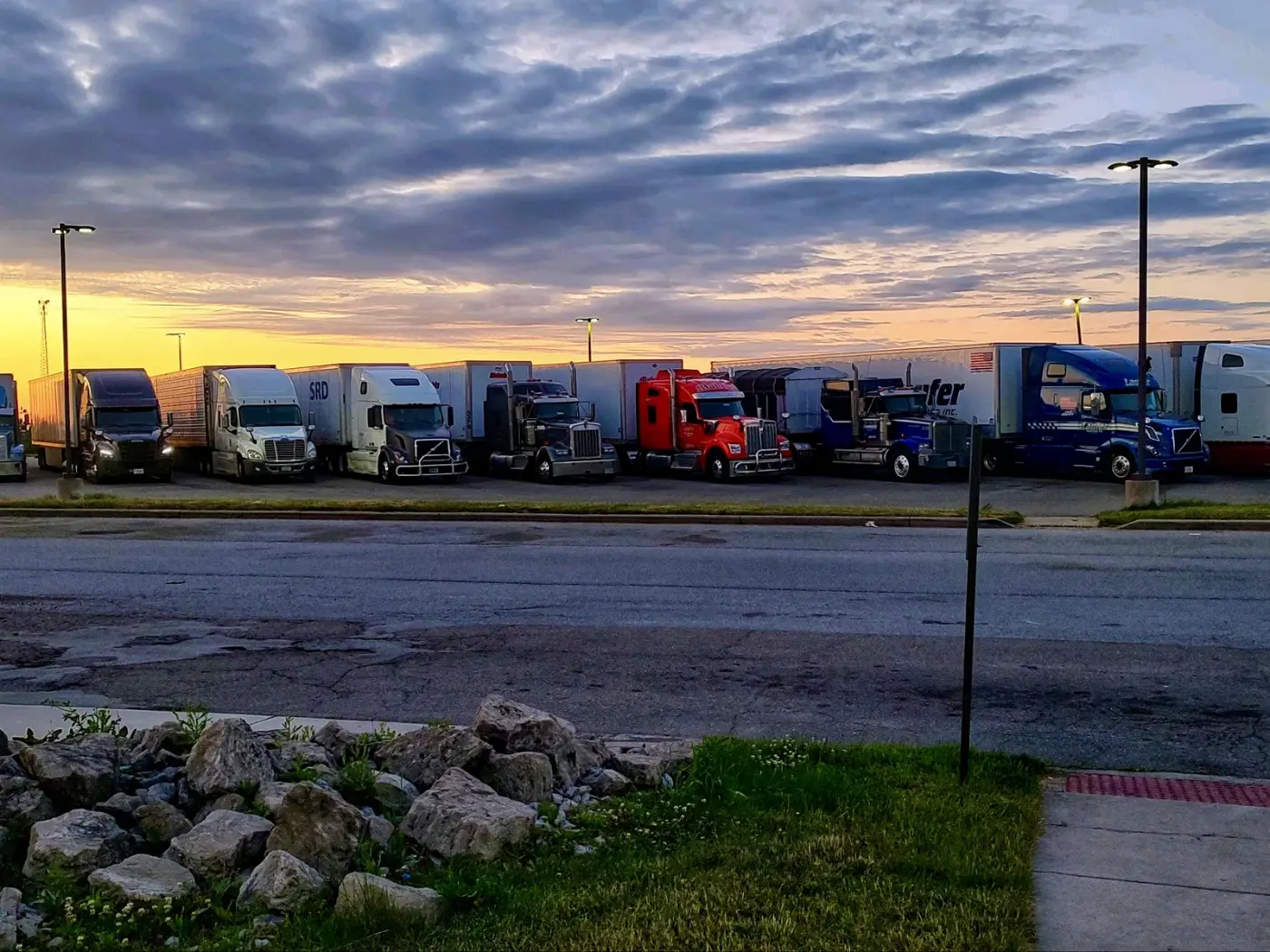
FCFS stands for first come, first served. On an FCFS load there is no scheduled appointment window: the receiver works trucks in the order they arrive. A driver who shows up at six in the morning is loaded before one who arrives at eight, regardless of when either was dispatched, and waiting is part of the job.
The term turns up on rate confirmations, in dispatch notes and in load board listings, usually without anyone explaining it. This guide covers what an FCFS load looks like from both sides of the dock, how it differs from an appointment, why receivers run this way, what it costs a shipper in capacity and rate, and what it does to a driver's day.
What does FCFS stand for in trucking?
FCFS is first come, first served. Applied to freight, it means a facility does not require appointment times. It opens at a set hour, closes at a set hour, and works whatever trucks are in the queue in arrival order until it closes.
You may have seen it written several ways. First come first serve, first-come-first-served, FCFS, and the phrase "on a first come, first served basis" all mean the same thing on a rate confirmation. It’s most often simply abbreviated as FCFS. The facility is telling the carrier they do not need to make an appointment to be loaded or unloaded, as long as they arrive during the designated shipping or receiving hours.
How does an FCFS load actually work?
The driver arrives at the facility, checks in at the guard shack or the receiving office, and joins the queue. Some facilities run a paper sign-in sheet, some take a driver’s phone number and call when it is their turn, and some simply have trucks wait in a line. From there the driver waits until a dock door opens and it becomes their turn.
The details vary between facilities and are helpful to know before the truck arrives: which gate to enter, where to stage, who to check in with, and whether there is room to wait in the shipper or receiver’s lot. A driver arriving at an unfamiliar FCFS receiver without this information can lose significant time while figuring out the system, and a truck parked in the wrong spot can add congestion and increase wait times.
What makes FCFS unpredictable is that the queue is not visible until a driver arrives. A driver leaving Hartford at four in the morning has no way of knowing whether four trucks or forty are already sitting at the receiver. Two loads to the same customer on consecutive days can turn out completely differently, and neither the driver nor dispatch have control over the outcome.
FCFS can be a significant advantage for carriers at times. Appointment times can be difficult to hit with the unpredictable nature of trucking. Traffic, weather and customer delays on one end can create a missed appointment time on another. There are other scenarios where appointments are only available at inconvenient times, or have to be made far in advance, and then don’t actually work with the dispatch on the actual day of the appointment.
FCFS vs appointment loads: what is the difference?
An appointment load has a specific time slot. The carrier books it, or it is assigned by the shipper or receiver. The driver or dispatcher must plan the run around it, and the facility expects that truck in that window. An FCFS load has an operating window instead, and the driver may be loaded very quickly, or wait several hours depending on the influx of trucks at any given time. Here is a practical comparison.
| Factor | FCFS load | Appointment load |
|---|---|---|
| Timing | Operating window only, no set time | Specific booked time |
| Arrival strategy | Early, before the queue builds | Right on time, or slightly early |
| Wait time | Unknown until you are in the queue | Broadly predictable |
| Missing the window | Wait for the next day | Reschedule or become a “work-in” |
| Planning burden | More freedom for the carrier | More specific planning for the carrier |
| Admin cost | Near zero for the facility, unless detention occurs | Staff time to book and reschedule, detention time when carriers must wait past appointment time |
| Common at | Steel processing facilities, smaller manufacturers, low volume shippers and receivers | Distribution centers, retail stores, high volume shippers and receivers |
Neither is necessarily better, although a carrier generally prefers FCFS. An appointment may give some certainty, but takes flexibility away, since a truck that misses an appointment is generally no longer eligible for detention pay and may wait several hours or even in rare cases days to get unloaded. Which arrangement costs a shipper or receiver more depends on how well they are running their operation.
Why do shippers and receivers use FCFS?
One answer is that scheduling can be expensive and the facility doesn’t have a volume that makes appointments a necessity. An appointment system means investing in a scheduling system or a team of people (or both) to manage appointments, holding doors for trucks that may not show, and rescheduling when issues arise. FCFS avoids some of those costs.
FCFS works best where the facility has room for it, some shippers or receivers have limited docks and yard space and cannot handle a sudden influx of trucks. A large facility, a location with low volume, or a shipper or receiver that is adequately staffed with skilled workers who can load and unload quickly can have a successful FCFS arrangement. A facility with two dock doors, a minimal lot in a congested area (downtown Chicago for example) could not easily accommodate FCFS.
When FCFS goes wrong: the line you can’t predict
Because it’s trucking, we have to acknowledge bad days can and do happen. When it comes to FCFS, they are usually caused by volume the dock simply cannot absorb at a given time. When a shipper books more carriers than the facility can physically work in a day or too many trucks arrive at approximately the same time, the line can get very long. Laufer’s drivers have encountered lines of close to 20 trucks on some occasions.
Ironically, this arrangement can result in more charges the customer is responsible for, such as detention or layover, so the money saved on manpower and systems to schedule appointments may be negated by accessorials. Federal research into detention has consistently found that dock delay is one of the more expensive and least visible costs in freight, and it is borne first by the carrier and unfortunately for the trucking industry, only sometimes by shippers and receivers.
A customer may feel long term pain when carriers begin to realize the cost of hauling in and out of a particular facility due to long wait times, and the carriers now will no longer accept their loads.
What FCFS costs a shipper in capacity and rate
This is the part most shippers do not immediately see, and it matters more than the wait itself. Carriers keep track of facilities. A dock that consistently holds trucks for five or six hours becomes a place drivers ask not to be sent and dispatchers route around when they have a choice. Over time that facility gets fewer bids, less consistent service, and its freight is covered by whoever happens to be desperate rather than by carriers who know the lane. This shipping and receiving issue quietly becomes a capacity problem.
It shows up in the rate as well. What a carrier charges to run a lane reflects what the lane actually costs to serve, and a customer known for long unpredictable wait times costs more to serve than one that turns a truck in forty minutes. A facility that runs FCFS well pays nothing for it. One that runs it badly pays for it in every quote it receives, and they may not even realize this is happening.
The reverse is also true, and this is a useful note for shippers and receivers. A well-run FCFS dock with room to stage, enough doors, and crews who keep trucks moving, is more desirable than an appointment system, and carriers price it accordingly.
What FCFS means for a driver's day
It means, ideally, arriving early and accepting that the clock is running whether or not the truck is moving. Drivers who run FCFS freight regularly build habits around it: get there before the doors open, know which receivers back up on a Monday, know which ones clear out by mid-morning.
The part that is easy to miss is the hours-of-service consequence. Time spent waiting at a dock is generally on-duty time under the FMCSA hours-of-service rules, and on-duty time that is not spent driving still burns the driver’s fourteen-hour window. A four-hour wait does not just cost four hours. It can cost the driver not making it to their next load on time, not finding a decent parking spot for the night, or missing their son’s soccer game because they didn’t make it home in time.
Carrier pay structure matters here too. Laufer pays detention on top of a guaranteed weekly minimum of $1,200 by direct deposit, along with stop pay and overnight pay, so a driver stuck in a queue is not simply watching the day disappear unpaid. Not every carrier does that, and it is worth asking about. In some cases, detention is less of an issue particularly for anyone coming off OTR into local work, since they are transitioning to an hourly pay structure at Laufer.
Does detention apply on an FCFS load?
Usually yes, but the clock can be harder to define.
Detention normally starts after the first two hours from the appointment time. On an FCFS load there is no appointment time to measure from. Carriers generally start the clock on arrival time instead, so the free window starts when the truck checks in rather than when it was due. Whether that is what your rate confirmation or contract actually states is worth reading before the load moves to avoid future detention disputes.
How do carriers plan around FCFS receivers?
A carrier that runs the same lanes repeatedly builds up knowledge and can develop a rhythm with regular shippers and receivers. It learns which customers move through a line quickly, which back up after a holiday, and which are worth arriving at before opening. That knowledge is the potential difference between a busy FCFS receiver being a minor inconvenience and a recurring problem.
Laufer runs 53’ dry vans, flatbeds, step decks and Conestogas out of Hartford, Wisconsin, hauling steel coils, bagged minerals in supersacks, stamped parts, paper rolls and corrugated products across Wisconsin, Chicagoland and the wider Midwest. Running the same regional lanes with the same drivers is what helps Laufer stay on top of getting your freight picked up and delivered on time.
The general principle holds regardless: repeat lanes and a team who knows the customers is a winning arrangement, this is an argument for establishing a relationship with an asset carrier over spot market capacity, and worth considering when you are vetting a carrier.
Shipping into an FCFS facility with Laufer
If your freight delivers into a first come, first served facility, the useful conversation is about what the wait times there actually look like, rather than simply disclosing operating hours. This will avoid future service and pricing problems.
Laufer is a family-owned, asset-based carrier in Hartford, Wisconsin, running our own trucks and our own trailers since 1977. Take a look at what we run, or send us the lane and we will quote it.